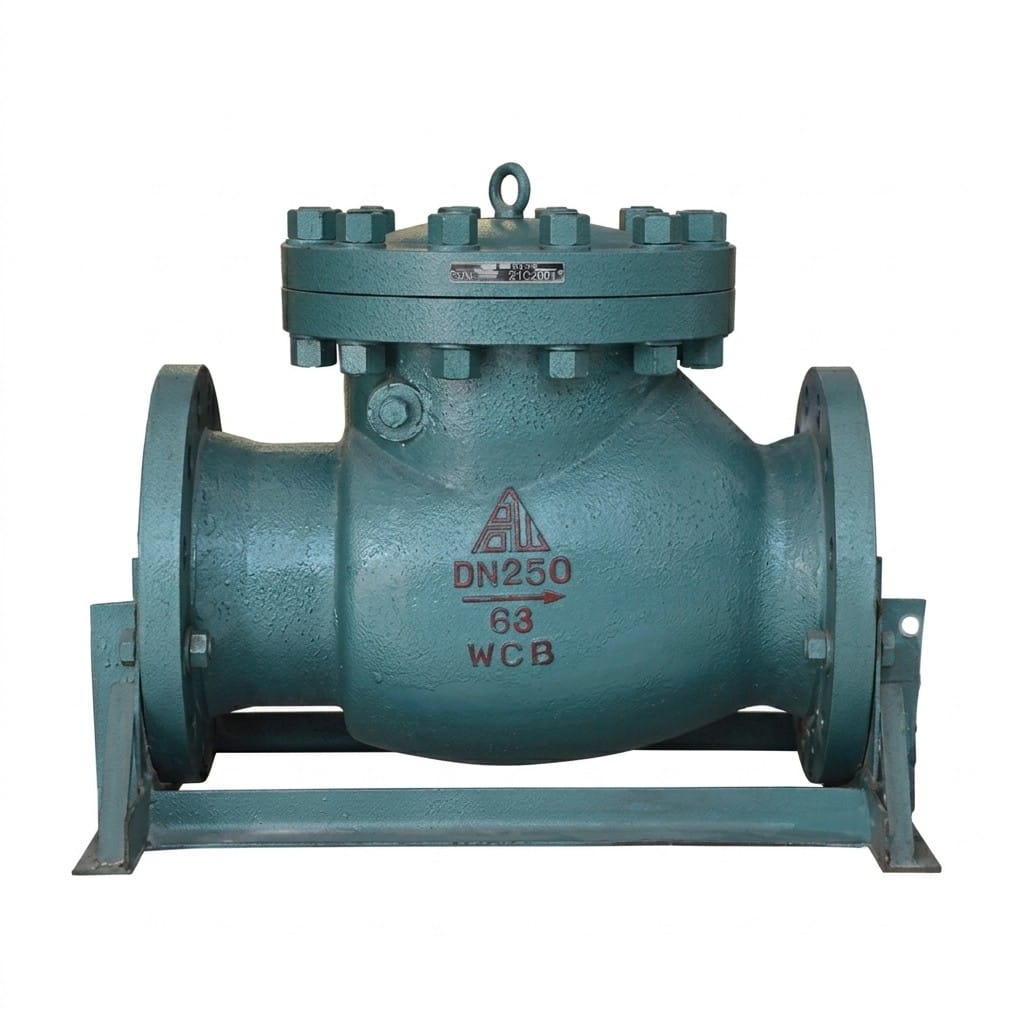
H44H Swing Check Valve
- Product Model: H44H Series Swing Check Valve (H44H-16C/25/40/63/100)
- Pressure Rating: PN16 ~ PN100 (1.6MPa ~ 10.0MPa)
- Connection Type: Flanged connection
- Main Material: WCB cast steel body
- Sealing Type: Metal hard seal with alloy overlay
- Working Medium: Water, steam, oil and weak corrosive fluid
- Max Working Temperature: ≤425℃
- Working Principle: Automatically open and close by medium pressure to prevent backflow
- Installation Way: Suitable for horizontal pipeline mounting
- Application: Petroleum, chemical industry, power plant and industrial water supply pipeline
Contact Us for Pricing
Interested in this product? Contact us now for detailed pricing and product information.
Product Details
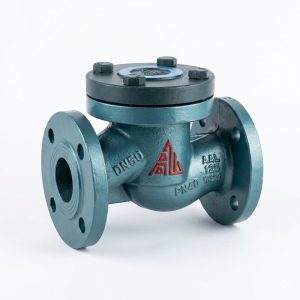
The H44H flanged swing check valve is the standard non-return valve for a large horizontal main: a disc on a hinge pin swings fully out of the path when the pump runs, so pressure loss is minimal, and swings back onto its seat when flow stops. With a WCB cast steel body and a carbide-overlaid metal seat it runs to 425°C, and the series covers PN16 through PN100 from DN50 to DN600 — the widest pressure range in our check valve group.
- Hinged swing disc lifts clear of the flow — the lowest pressure drop of any check valve pattern
- Carbide hard alloy overlaid sealing face on a WCB cast steel disc and seat, to 425°C
- Five pressure classes: PN16, PN25, PN40, PN63 and PN100
- DN50–DN600, flanged to GB/T 9113 / JB/T 79 / HG/T 20596
- Automatic operation on medium pressure alone — no power, air or control line
- For horizontal pipelines only; the flow arrow on the body must match flow direction
Product Overview
The H44H is an automatic non-return valve that stops backflow with a disc hinged inside the body. Forward flow lifts the disc off its seat; when flow stops or reverses, gravity and the returning column of fluid swing the disc back onto the seat. It is fitted at pump discharge, compressor outlets and critical nodes in power plants, refineries and chemical plants, where a large bore has to be protected without adding a restriction to the line.
The swing pattern is chosen for two reasons: bore size and head loss. A hinged disc can seal a DN600 main that would be impractical as a lift check valve, and when open it presents almost nothing to the flow. The trade-off is closure behaviour — a disc falling back under gravity hits its seat, and on a large bore or a fast-tripping pump that impact is both loud and damaging. Where that matters, the selection notes below point to the right alternative.
What the Model Code Means
H = check valve, 4 = flanged connection, 4 = swing (hinged disc) pattern, H = stainless steel seat facing; the number after the dash is the PN class, with C marking the WCB cast steel body on PN16. See the Valve Model Decoder.
Core Strengths
Swing Disc Mechanism
Swing disc design with low pressure drop and minimal flow resistance. The disc opens fully at low flow velocity, reducing energy loss and pump load during normal operation.
Hard Alloy Sealing Surface
Valve disc and seat feature overlaid carbide hard alloy surfacing, providing excellent wear resistance, high-temperature durability, and reliable sealing under harsh operating conditions.
Wide Pressure Coverage
Available from PN16 to PN100 pressure classes, covering a broad range of industrial applications from low-pressure water systems to high-pressure petrochemical pipelines.
Large Size Range
DN50 up to DN600 available, making it ideal for main pipeline applications in power plants, water treatment facilities, and large-scale industrial systems.
Robust WCB Construction
All major components made from WCB cast steel with 45# steel shaft, ensuring superior strength, corrosion resistance, and long service life up to 425°C.
Quick-Closing Response
Disc closes rapidly when flow stops or reverses, effectively preventing water hammer and protecting downstream pumps, turbines, and equipment from reverse flow damage.
Performance Specifications
| Model | Shell Test (MPa) | Seal Test (MPa) | Air Sealing Test | Applicable Medium | Max. Temperature |
|---|---|---|---|---|---|
| H44H-16C | 2.4 | 1.6 | — | Water, Steam, Oil etc. | ≤425°C |
| H44H-25 | 3.8 | 2.5 | — | Water, Steam, Oil etc. | ≤425°C |
| H44H-40 | 6.0 | 4.0 | 0.6 MPa | Water, Steam, Oil etc. | ≤425°C |
| H44H-63 | 9.6 | 6.3 | — | Water, Steam, Oil etc. | ≤425°C |
| H44H-100 | 16.0 | 10.0 | — | Water, Steam, Oil etc. | ≤425°C |
Seat test pressure is taken at the class rating pressure for this series, which is why the values differ from the 1.1x convention used on our lift and silent check valve pages. Confirm the test certificate value you need at order so the inspection record matches your project requirement.
Main Component Materials
| Part Name | Material |
|---|---|
| Body, bonnet, rocker | WCB cast steel |
| Disc and seat ring | WCB base with overlaid carbide hard alloy surfacing |
| Valve shaft (hinge pin) | 45# carbon steel |
Main Dimensions & Weights
PN16
| Nominal size | L | H | Weight |
|---|---|---|---|
| DN50 | 230 | 165 | 20 |
| DN65 | 290 | 175 | 25 |
| DN80 | 310 | 190 | 31 |
| DN100 | 350 | 225 | 41 |
| DN125 | 400 | 240 | 62 |
| DN150 | 480 | 265 | 83 |
| DN200 | 600 | 365 | 134 |
| DN250 | 730 | 395 | 197 |
| DN300 | 698 | 435 | 268 |
| DN350 | 787 | 490 | 325 |
| DN400 | 914 | 520 | 490 |
| DN450 | 978 | 550 | 590 |
| DN500 | 978 | 570 | 680 |
| DN600 | 1295 | 600 | 790 |
PN25
| Nominal size | L | H | Weight |
|---|---|---|---|
| DN50 | 230 | 165 | 24 |
| DN65 | 290 | 175 | 30 |
| DN80 | 310 | 190 | 37 |
| DN100 | 350 | 225 | 49 |
| DN125 | 400 | 240 | 74 |
| DN150 | 480 | 285 | 99 |
| DN200 | 600 | 365 | 160 |
| DN250 | 730 | 395 | 226 |
| DN300 | 711 | 435 | 308 |
| DN350 | 838 | 490 | 373 |
| DN400 | 864 | 520 | 563 |
| DN450 | 978 | 550 | 632 |
| DN500 | 1016 | 570 | 782 |
| DN600 | 1346 | 600 | 908 |
PN40
| Nominal size | L | H | Weight |
|---|---|---|---|
| DN50 | 230 | 165 | 29 |
| DN65 | 290 | 175 | 36 |
| DN80 | 310 | 190 | 45 |
| DN100 | 350 | 225 | 59 |
| DN125 | 400 | 240 | 89 |
| DN150 | 480 | 285 | 120 |
| DN200 | 600 | 365 | 193 |
| DN250 | 730 | 395 | 260 |
| DN300 | 711 | 435 | 354 |
| DN350 | 838 | 490 | 423 |
| DN400 | 864 | 520 | 648 |
| DN450 | 978 | 550 | 727 |
| DN500 | 1016 | 570 | 899 |
| DN600 | 1346 | 600 | 1044 |
PN63
| Nominal size | L | H | Weight |
|---|---|---|---|
| DN50 | 300 | 190 | 34 |
| DN65 | 340 | 205 | 43 |
| DN80 | 380 | 205 | 54 |
| DN100 | 430 | 235 | 71 |
| DN125 | 500 | 265 | 107 |
| DN150 | 550 | 295 | 143 |
| DN200 | 650 | 355 | 242 |
| DN250 | 775 | 405 | 299 |
| DN300 | 900 | 465 | 407 |
| DN350 | 1025 | 515 | 451 |
| DN400 | 1150 | 570 | 745 |
PN100
| Nominal size | L | H | Weight |
|---|---|---|---|
| DN50 | 300 | 192 | 42 |
| DN65 | 340 | 207 | 52 |
| DN80 | 380 | 235 | 65 |
| DN100 | 430 | 265 | 85 |
| DN125 | 500 | 313 | 128 |
| DN150 | 550 | 360 | 172 |
| DN200 | 650 | 420 | 277 |
| DN250 | 775 | 480 | 344 |
| DN300 | 900 | 540 | 468 |
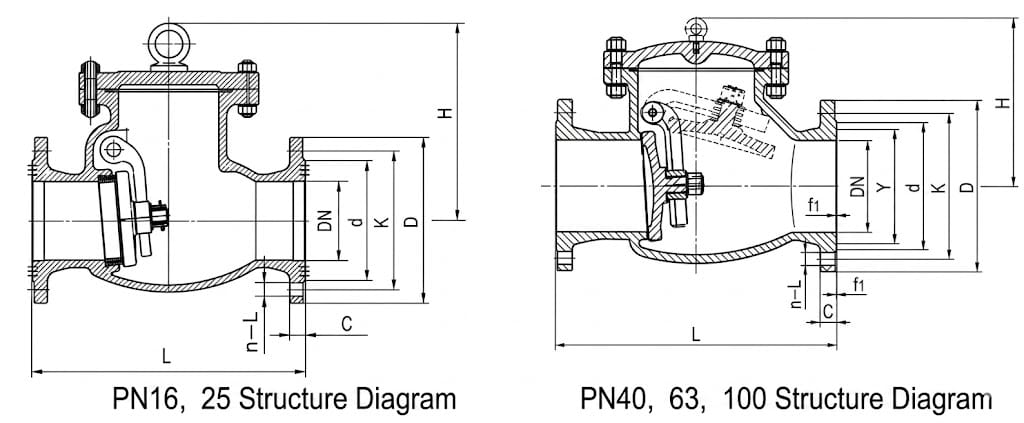
L = face-to-face length, H = overall height. PN63 covers DN50–DN400 and PN100 DN50–DN300 on this series. Flange facing and drilling follow the standard noted in the design standards below; certified drawings are issued with the quotation.
Which Check Valve for Which Duty
| Duty | Correct valve | Why |
|---|---|---|
| Large horizontal main, minimum head loss | H44H swing check valve (this page) | Disc lifts out of the flow; the only pattern practical above about DN250 |
| Pump discharge that trips often, noise and surge a concern | H42F silent check valve | Spring returns the disc before reverse flow builds, so there is no slam |
| Long pump discharge main where hammer must be capped | HH46X slow-closing check valve | Butterfly disc closes fast then slows near the seat, limiting the spike |
| Small bore, vertical riser or low flow | H41H lift check valve | Guided disc seats positively at low velocity |
| Flanged space is limited | H76H/H76W wafer double disc | Short wafer body between flanges |
| Horizontal pipe, upward flow, PN25 steel body | H42H vertical lift check valve | Higher class than the ductile iron silent type |
| Boiler return line on a gravity heating system | H7B41X hydraulic control check valve | Normally closed; opens on pump pressure, closes to stop overflow |
The honest limitation of the swing pattern: it needs a horizontal run, it needs flow to hold the disc open, and it closes with an impact. On a small line that is rarely a problem. On a large main behind a fast-tripping pump it is the reason water hammer specifications move to a slow-closing or silent design.
Structure Drawing
Design & Manufacturing Standards
- Design Standard: GB/T 12236
- Face-to-Face Dimensions: GB/T 12221
- Flange Standards: GB/T 9113, JB/T 79, HG/T 20596
- Testing & Inspection: GB/T 13927, JB/T 9092
- Applicable International Standards: API 594, EN 13709, EN 558 (optional)
Installation & Maintenance Guidelines
- Working Medium : Water, steam, oil and weak corrosive fluid
- Working Principle : Automatically open and close by medium pressure to prevent backflow
- Installation Way : Suitable for horizontal pipeline mounting
- Application : Petroleum, chemical industry, power plant and industrial water supply pipeline
- Flange Standards: GB/T 9113, JB/T 79, HG/T 20596 (refer to P95 Flange Dimension Table)
- Applicable International Standards: API 594, EN 13709, EN 558 (optional)
- Installation Position: Install horizontally or vertically on horizontal pipelines only. Not suitable for vertical upward flow pipelines.
- Flow Direction: Ensure the medium flow direction matches the arrow marked on the valve body. Incorrect installation will cause the valve to malfunction.
- Pipeline Support: Do not allow the check valve to bear pipeline weight. Large-diameter valves require independent support brackets.
- Maintenance: Regularly inspect the hinge pin, disc, and seat sealing surface for wear or corrosion to ensure reliable anti-backflow performance.
- Horizontal only: the disc hinges on a pin and needs gravity to return it. A vertical pipe with upward flow will hold the disc open and never close it — use a lift or silent check valve there.
- Full bore access: leave the cover clear for removal; the disc and hinge pin are serviced from the top without cutting the line out.
- Listen to the closure: a sharp bang on pump trip on a new installation usually means the disc is being slammed by a fast-tripping pump rather than a defect — that is a duty mismatch, and the answer is a slow-closing or silent check valve.
Application Fields
The H44H is the default non-return valve on large industrial mains: Power Generation Plants, Petroleum Refining, Chemical Industry, Water Supply Systems, Oil & Gas Pipeline, HVAC & District Heating, Marine Applications. It is specified where the bore is too large for a lift pattern, where head loss across the valve matters to the pumping cost, and where the medium is hot enough to rule out a soft seat.
What We Need to Quote Your H44H Check Valves
- Size and pressure class: DN50–DN600, PN16 to PN100.
- Medium and temperature: water, steam, oil or weakly corrosive fluid, up to 425°C.
- Pump and trip behaviour: motor size, check valve distance, and whether the pump trips fast — this decides whether a swing valve is the right answer at all.
- Flange standard and facing: GB/T 9113, JB/T 79 or HG/T 20596; RF as standard.
- Seat facing: carbide overlay as standard on this series; confirm if your spec calls for 13Cr only.
- Cover orientation: standard top cover; tell us if clearance above the pipe is restricted.
- Documentation: EN 10204 3.1 certificates, API 598 test records, CE for tenders.
Send the pump curve or the line duty and we will confirm the class and tell you honestly if the duty needs a slow-closing design instead. Drawings are in the download center.
Frequently Asked Questions
Why can a swing check valve not be fitted on a vertical pipe?
The disc hangs on a hinge pin and closes by gravity. On a vertical pipe with upward flow the stream holds the disc off its seat, and when the pump stops the disc has nothing to fall back against in time. On a downward flow line the disc is held closed by its own weight and the valve never opens properly. Use a lift pattern or a spring loaded silent check valve on vertical runs.
My new swing check valve bangs when the pump stops. Is it faulty?
Usually not. A hinged disc falling onto a metal seat makes noise, and the larger the bore and the faster the pump trips, the louder it is. If the bang is severe enough to shake pipework, the duty needs a slow closing HH46X or a spring return H42F rather than a repair to the H44H.
What does the carbide overlay buy me over a plain stainless seat?
Hard alloy surfacing resists erosion from solids and from the repeated impact of closure far better than 2Cr13 alone. On water with grit, on condensate lines, or where the valve closes often, it is the difference between lapping a seat once a year and replacing a disc.
Which pressure class do I need?
Match the class to the design pressure of the line, not the operating pressure, and check the temperature derating too – a PN16 valve at 425 degC is allowed far less pressure than at ambient. Send the design conditions and we will confirm the class.
Can it handle steam?
Yes, to 425 degC on the WCB body with hard alloy facing, which is why this pattern is common on plant steam and condensate headers. Provide the saturation pressure so the class is checked at temperature.
How is it maintained?
Unbolt the cover, lift out the disc and rocker, inspect the hinge pin for wear and the seat for erosion, then lap or replace. The valve does not have to come out of the line. Check the hinge pin specifically: a worn pin lets the disc sit off-centre and leak.
Get a Quote & Technical Support
Contact Gaoshan Valve for full dimension sheets, CAD drawings, class selection at temperature and a check valve recommendation for your main. Reply within 24 hours from our overseas sales desk.