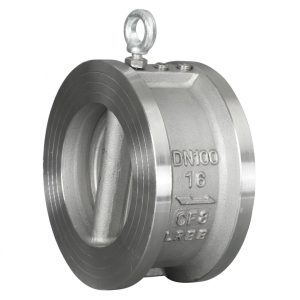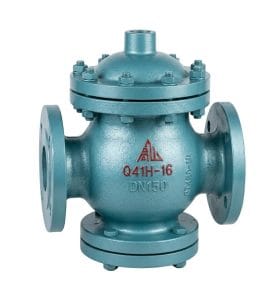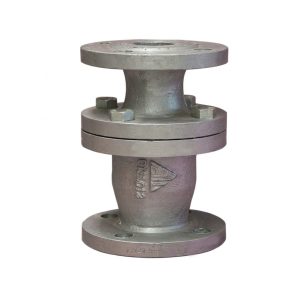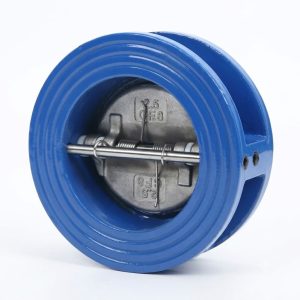
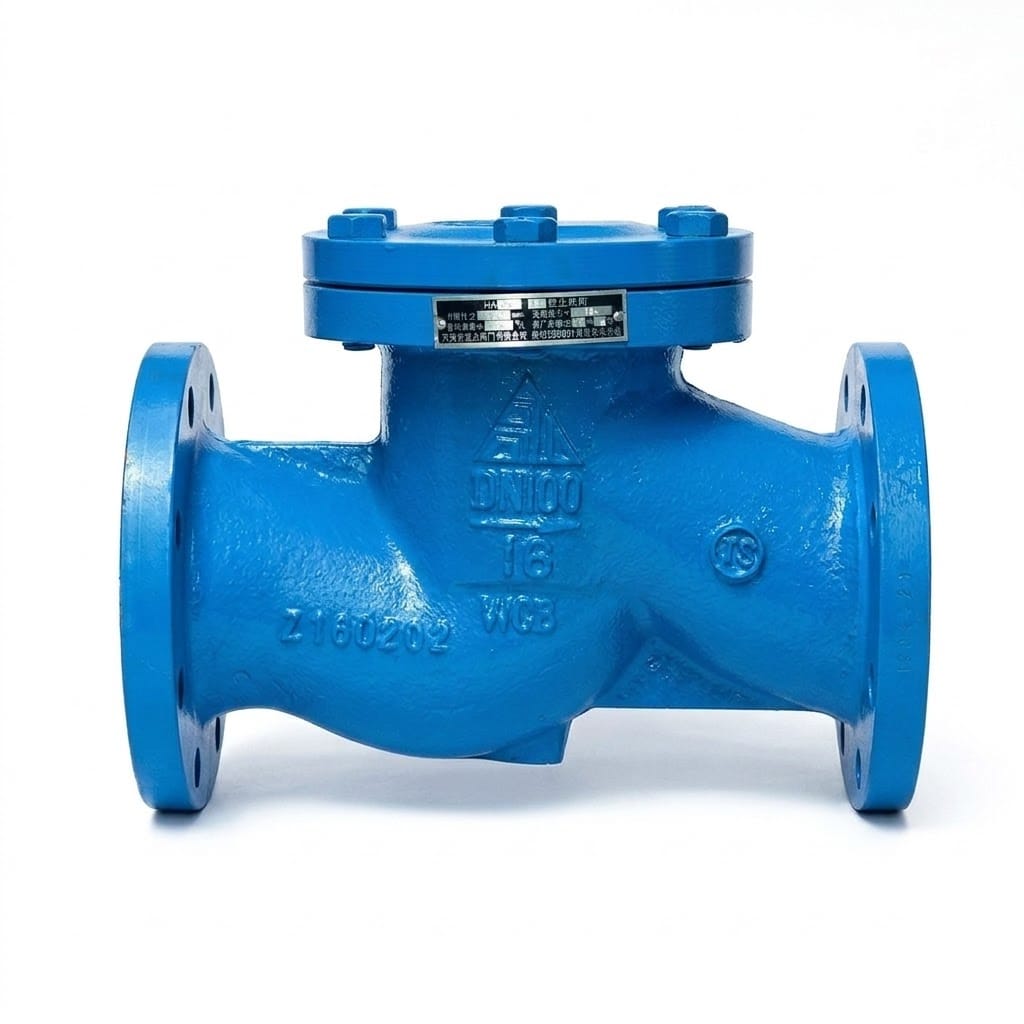
H41H Lift Check Valve
- Product Model: H41H Series Flanged Lift Check Valve (H41H-16 / 16Q / 16C / 25Q / 25)
- Pressure Rating: PN16 (1.6MPa) / PN25 (2.5MPa)
- Body Material: Gray Cast Iron / Ductile Iron / WCB Cast Steel
- Sealing Material: 2Cr13 Stainless Steel (with optional hard alloy overlay)
- Applicable Media: Water, Steam, Oil, and weak corrosive media
- Working Temperature: ≤200℃ / ≤300℃ / ≤425℃ (depending on material)
- Connection Type: Flanged (compliant with GB/T 9113 standard)
- Core Function: Automatically prevents medium backflow to protect pumps and equipment
- Installation: Suitable for vertical/horizontal pipelines, with direction marked on valve body
- Application Scenarios: Petroleum, chemical, power, water treatment and industrial pipeline systems
Contact Us for Pricing
Interested in this product? Contact us now for detailed pricing and product information.
Product Details
The H41H flanged lift check valve closes a pump discharge line by lifting a guided disc squarely onto its seat the moment forward flow dies. It is the metal-seated workhorse for water, steam and oil where temperature or erosion rules out a soft seat: a 2Cr13 stainless disc and seat, in three body materials covering duty to 200°C in gray iron, 300°C in ductile iron and 425°C in WCB cast steel, at PN16 and PN25 from DN25 to DN200.
- Lift (globe-pattern) disc on a guided stem — short, positive travel to the seat
- 2Cr13 stainless steel disc and seat facing as standard, with hard alloy overlay optional
- Three body materials: gray cast iron, QT450 ductile iron, WCB cast steel
- PN16 and PN25, DN25–DN200, water, steam, oil and weakly corrosive media
- Flanged ends to GB/T 9113; flow direction cast on the body
- Automatic operation — no external power, control air or operator input
Product Overview
The H41H is an automatic valve that prevents backflow in a pipeline. It opens when forward flow pressure lifts the disc off its seat, and closes by gravity and reverse pressure the moment flow stops or reverses. It is fitted at pump discharge and at critical points where reverse flow would drain a line, reverse a pump or flood equipment.
Choose a lift check valve rather than a swing check valve when the line is small, the flow may be low, or the pipe runs vertically upward. A swing check valve needs flow strong enough to hold a hinged disc open and needs a horizontal run; a lift check disc is guided, so it seats squarely at low flow and can work on a vertical pipe with upward flow. The cost of that is a longer flow path and a higher pressure drop than a swing valve of the same size.
What the Model Code Means
H = check valve, 4 = flanged connection, 1 = lift (piston/disc) pattern, H = stainless steel seat facing; the class suffix gives pressure and body material — 16 = PN16 gray iron, 16Q = PN16 ductile iron, 16C = PN16 WCB cast steel, 25Q and 25 = PN25 ductile iron and cast steel. See the Valve Model Decoder.
Core Strengths
Automatic Anti-Backflow
Valve disc opens/closes automatically by medium flow force, effectively preventing reverse flow and protecting pumps, motors, and pipeline equipment from backflow damage.
Reliable Sealing Performance
Valve seat and disc sealing surfaces are made of 2Cr13 stainless steel, with optional hard alloy overlay available for superior wear, corrosion, and high-temperature resistance.
Simple & Durable Structure
Compact design with minimal moving parts ensures stable operation and easy maintenance, making it ideal for long-term continuous service in industrial pipelines.
Multiple Material Options
Available in gray cast iron (≤200°C), ductile iron (≤300°C), and WCB cast steel (≤425°C) bodies to suit different temperature and pressure requirements.
Wide Application Range
Suitable for water, steam, petroleum products, and weak corrosive media in petroleum, chemical, power generation, and general industrial systems.
Flexible Installation
Vertical disc type for vertical pipelines and horizontal disc type for horizontal pipelines, meeting various on-site installation scenarios.
Performance Specifications
| Model | Nominal Pressure (MPa) | Shell Test (MPa) | Seal Test (MPa) | Max. Temperature | Applicable Medium |
|---|---|---|---|---|---|
| H41H-16 | 1.6 | 2.4 | 1.8 | ≤200°C (Gray Cast Iron) | Water, Steam, Oil |
| H41H-16Q / 25Q | 1.6 / 2.5 | 2.4 / 3.8 | 1.8 / 2.8 | ≤300°C (Ductile Iron) | Water, Steam, Oil |
| H41H-16C / 25 | 1.6 / 2.5 | 2.4 / 3.8 | 1.8 / 2.8 | ≤425°C (WCB Cast Steel) | Water, Steam, Oil |
The temperature limit follows the body material, not the trim: the 2Cr13 disc and seat tolerate more heat than a cast iron body can safely take. Select on the body material column — gray iron to 200°C, ductile iron to 300°C, WCB cast steel to 425°C — and confirm the saturation pressure of any steam service with us before ordering.
Main Component Materials
| Model | Valve Body / Bonnet | Valve Seat / Disc |
|---|---|---|
| H41H-16 | Gray Cast Iron | 2Cr13 Stainless Steel |
| H41H-16Q / 25Q | Ductile Iron | 2Cr13 Stainless Steel |
| H41H-16C / 25 | WCB Cast Steel | 2Cr13 Stainless Steel |
Main Dimensions & Weights
PN16
| Nominal size | Face-to-Face L | Height H | Weight |
|---|---|---|---|
| DN40 | 200 | 96 | 8 |
| DN50 | 230 | 103 | 11 |
| DN65 | 290 | 150 | 14 |
| DN80 | 310 | 156 | 22 |
| DN100 | 350 | 166 | 32 |
| DN125 | 400 | 201 | 60 |
| DN150 | 480 | 238 | 95 |
| DN200 | 600 | 268 | 120 |
PN25
| Nominal size | Face-to-Face L | Height H | Weight |
|---|---|---|---|
| DN25 | 160 | 90 | 6 |
| DN32 | 180 | 110 | 9 |
| DN40 | 200 | 115 | 11 |
| DN50 | 230 | 126 | 14 |
| DN65 | 290 | 165 | 25 |
| DN80 | 310 | 165 | 32 |
| DN100 | 350 | 180 | 45 |
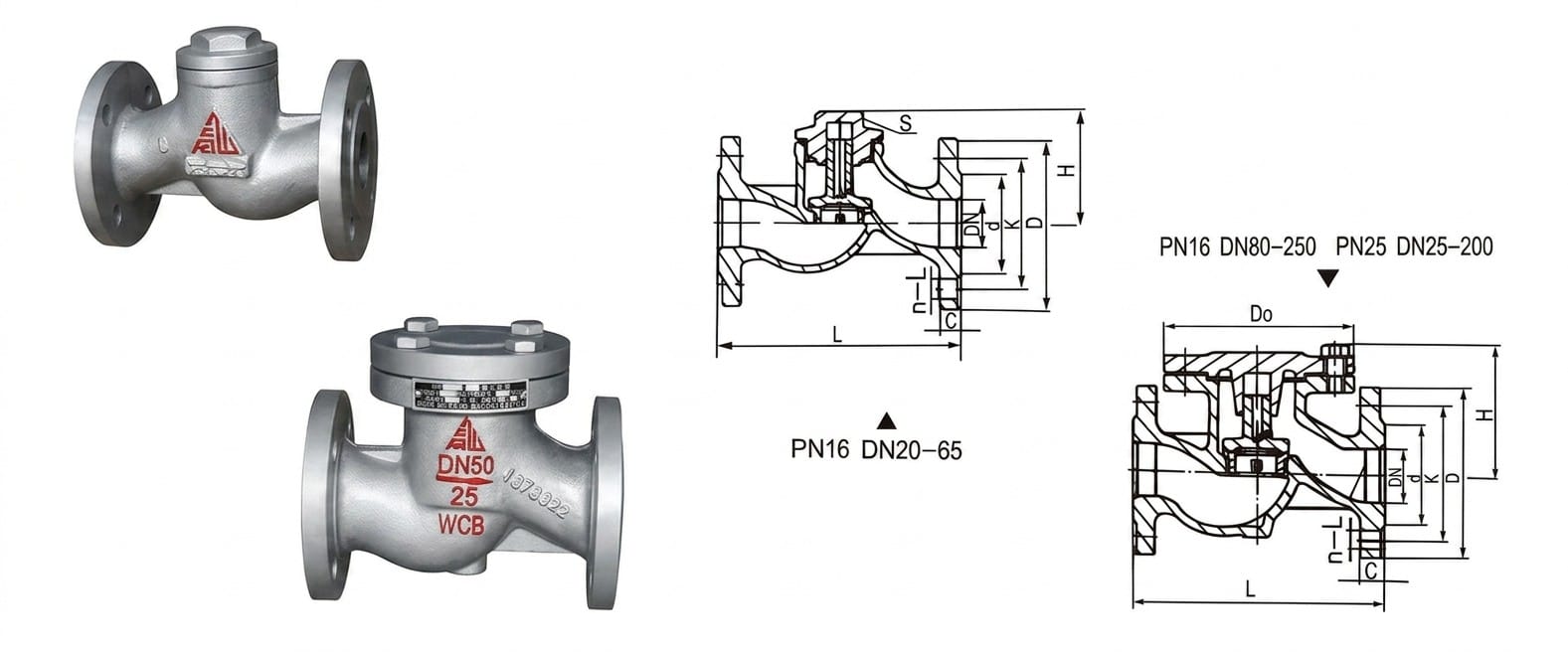
L = face-to-face length. The PN16 range runs DN40–DN200 and the PN25 range DN25–DN100; for sizes outside these, the H44H swing check valve covers larger diameters on horizontal lines.
Lift Check Valve or Swing Check Valve: Which to Specify
| Requirement | H41H lift check valve | H44H swing check valve |
|---|---|---|
| Pipe orientation | Horizontal, or vertical with upward flow | Horizontal only |
| Low flow behaviour | Guided disc still seats; better at low velocity | Needs flow to hold the disc open; slams at low flow |
| Pressure drop | Higher – flow turns up and over the seat | Lower – disc lifts into the stream |
| Size range | DN25-DN200 on this page | DN50-DN600, up to PN100 |
| Noise at closure | Moderate; disc drops a short guided distance | Audible on large sizes unless slow-closing |
| Choose it when | Small bore, vertical riser, steam, low flow | Large horizontal main, minimum head loss |
If the real problem is noise and slam on a pump discharge, the right answer is not a smaller lift check but a purpose-built non-slam design: see the H42F silent check valve for vertical pump discharge, or the HH46X slow-closing check valve for a long horizontal main where water hammer has to be capped.
Structure Drawing
Design & Manufacturing Standards
- Design Standard: GB/T 12235
- Face-to-Face Dimensions: GB/T 12221
- Flange Standards: GB/T 9113, JB/T 79, HG/T 20596
- Testing & Inspection: GB/T 13927, JB/T 9092
- Applicable International Standards: EN 13709, EN 558 (optional)
Installation & Maintenance Guidelines
- Body Material : Gray Cast Iron / Ductile Iron / WCB Cast Steel
- Sealing Material : 2Cr13 Stainless Steel (with optional hard alloy overlay)
- Applicable Media : Water, Steam, Oil, and weak corrosive media
- Working Temperature : ≤200℃ / ≤300℃ / ≤425℃ (depending on material)
- Connection Type : Flanged (compliant with GB/T 9113 standard)
- Core Function : Automatically prevents medium backflow to protect pumps and equipment
- Installation : Suitable for vertical/horizontal pipelines, with direction marked on valve body
- Application Scenarios : Petroleum, chemical, power, water treatment and industrial pipeline systems
- Applicable International Standards: EN 13709, EN 558 (optional)
- Installation Requirements: Do not let the check valve bear pipeline weight; large valves require independent support to avoid excessive pipeline stress.
- Flow Direction: Install the valve with the medium flow direction matching the arrow marked on the valve body.
- Pipeline Orientation: Vertical disc lift check valves must be installed on vertical pipelines; horizontal disc types on horizontal pipelines.
- Maintenance Tips: Keep the valve clean during operation; regularly inspect sealing surfaces for wear to ensure reliable anti-backflow performance.
- Strain upstream: fit a strainer or confirm the line has been flushed; a disc and metal seat will hold a piece of slag off its seat and leak for the rest of its life.
- Access for the bonnet: leave clearance above the valve so the bonnet can be unbolted and lifted without removing the valve from the line.
- Check the seat after commissioning: with the pump stopped and the line static, watch for backflow downstream; a lift check that leaks on a static head usually has debris on the seat rather than a damaged disc.
Application Fields
The H41H is specified where backflow protection has to survive heat or erosion: Water Treatment, Power Plants, Petrochemical, Oil & Gas, HVAC Systems, General Industry. On steam and hot condensate duty it is normally the default choice, because a soft-seated silent or wafer check valve cannot hold its seat at those temperatures.
What We Need to Quote Your H41H Check Valves
- Size and quantity: DN25–DN200, PN16 or PN25.
- Medium and temperature: decides the body material — gray iron, ductile iron or WCB.
- Steam conditions: saturation pressure, so we can confirm the class and the seat facing.
- Pipe orientation: horizontal or vertical with upward flow.
- Seat facing: 2Cr13 as standard; hard alloy overlay for erosive or high-cycle duty.
- Flange standard: GB/T 9113 as standard; EN 1092 or ASME on request.
- Documentation: EN 10204 3.1 certificates and test records for tenders.
Send the pump data sheet or the line list — bore, medium, temperature, orientation — and we will confirm whether a lift pattern is right or whether a swing, silent or slow-closing check valve suits the duty better. Drawings are in the download center.
Frequently Asked Questions
What is the difference between a lift check valve and a silent check valve?
Both close by a disc moving along a guided path. A lift check like the H41H has a metal seat and relies on gravity plus reverse pressure, so it closes firmly but with an impact. A silent check like the H42F adds a spring that returns the disc as soon as forward flow decelerates, so it closes before reverse flow builds and without the bang. On a pump that trips often, the silent type protects the pipe from the pressure spike.
Can the H41H be installed on a horizontal pipe?
Yes. Small bore lift check discs are guided and seat by gravity on a horizontal run as well as on a vertical pipe with upward flow. What it must not be is fitted with downward flow, and it should not carry pipe weight – support the pipe either side.
Which body material for a steam line?
WCB cast steel – the H41H-16C, H41H-25 models – which are rated to 425 degC. Gray iron stops at 200 degC and ductile iron at 300 degC. Give us the saturation pressure of the steam so the class is checked against the actual condition rather than the nameplate.
Why does my new check valve leak when the pump stops?
Almost always debris on the seat rather than a damaged valve. New installations leave slag, scale and gasket cuttings in the line, and a metal seat will hold that material off its seating face. Flush the line, then cycle the valve a few times to sweep the seat. If it still passes, the seat needs lapping or the disc replaced.
Is a hard alloy overlay worth specifying?
Where the valve cycles often, or the medium carries solids, or you are closing against a high differential. The overlay costs more at order but holds its seal far longer than 2Cr13 alone under erosion, and it saves a line break later.
Can it be used to prevent water hammer?
It stops reverse flow, which is one cause of hammer, but it does not arrest a pressure wave – a metal seated lift check closes with an impact of its own. If surge is the concern, specify the HH46X slow-closing check valve or a surge arrester alongside it.
Get a Quote & Technical Support
Contact Gaoshan Valve for dimension sheets, CAD drawings and a body-material recommendation matched to your medium and temperature. Reply within 24 hours from our overseas sales desk.