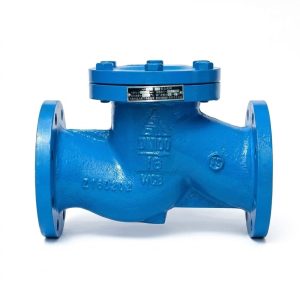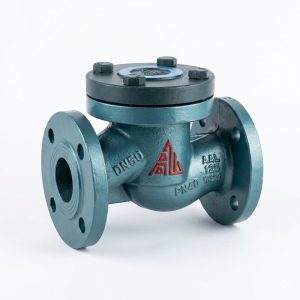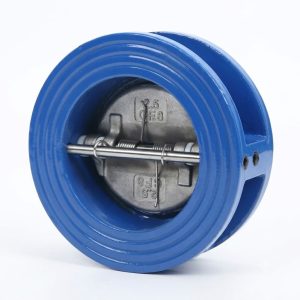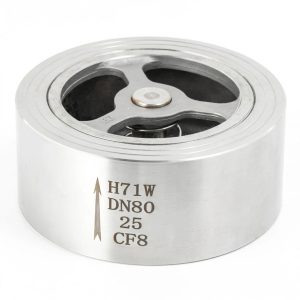
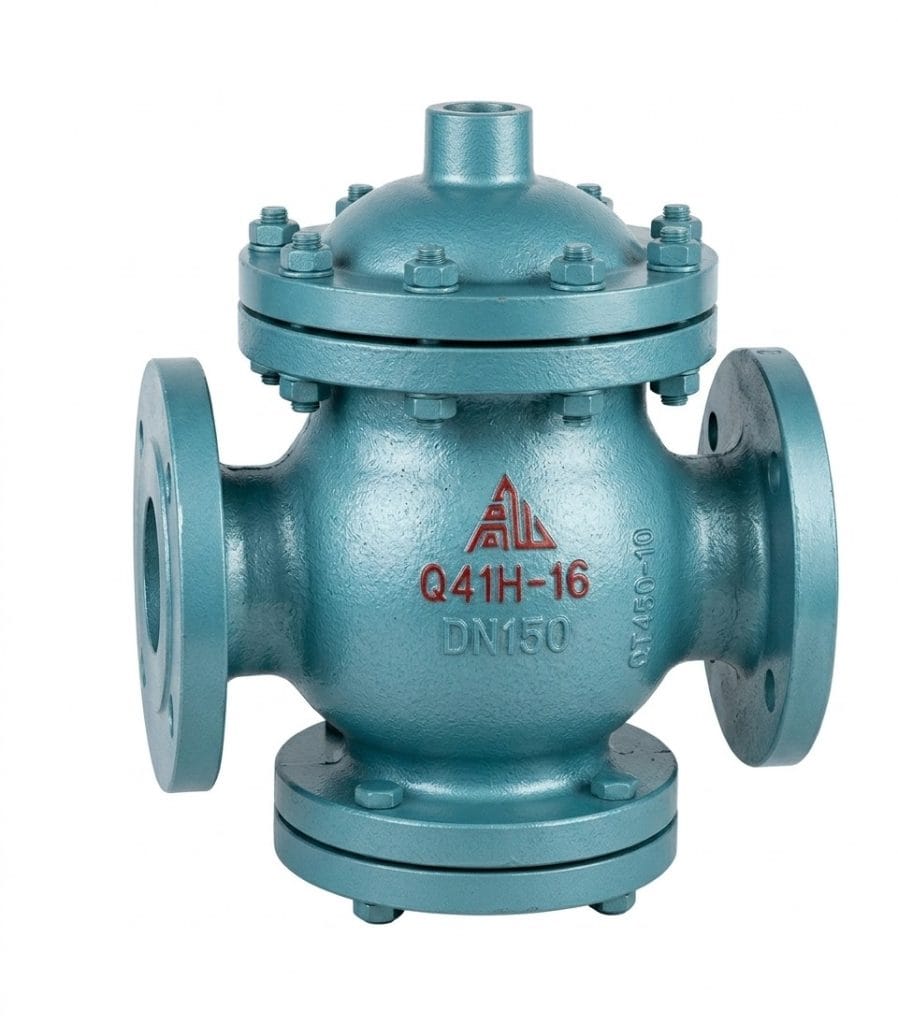
H7B41X hydraulic control check valve
- Product Model: H7B41X Series Hydraulic Control Check Valve (H7B41X-16 / H7B41X-16C)
- Pressure Rating: PN16 (1.6MPa)
- Connection Type: Flanged connection
- Structure: Normally closed pressure-controlled lift check valve
- Body Material: Gray cast iron (H7B41X-16) / WCB cast steel (H7B41X-16C)
- Sealing Material: 2Cr13 stainless steel valve disc and seat
- Spring Material: 50CrVA alloy steel
- Applicable Media: Water, oil products
- Working Temperature: ≤70℃
- Core Function: Automatically opens/closes with pipeline pressure changes to prevent boiler overflow and pump backflow
- Application Scenarios: Normal pressure boiler return water pipelines, water and oil pipeline systems
Contact Us for Pricing
Interested in this product? Contact us now for detailed pricing and product information.
Product Details
The H7B41X hydraulic control check valve solves one specific problem on a gravity return line: a boiler overflowing when the feed pump stops. It is normally closed, held shut by a calibrated 50CrVA spring, and opens only when pipeline pressure overcomes that preload. When the pump trips, the spring closes the valve immediately, so the column of water above the boiler cannot drain into it. PN16, DN40 to DN200, on water and oil return duty to 70°C.
- Normally closed at rest — opens only when line pressure exceeds the spring preload
- Spring-assisted closure on pump trip, so boiler overflow is prevented without operator action
- No external power, control air or solenoid — self-acting on pipeline pressure alone
- 2Cr13 stainless steel disc, seat and stem with a 50CrVA alloy spring
- Gray cast iron body (H7B41X-16Q) or WCB cast steel body (H7B41X-16C)
- PN16 (1.6 MPa), DN40–DN200, water and petroleum products to 70°C
Product Overview
The H7B41X is a self-acting hydraulic control check valve for return-water pipelines in natural-pressure heating systems. It opens when forward pressure exceeds the spring preload, letting return water flow back to the boiler. When a pump stops or power fails and flow ceases, the spring-assisted disc closes at once, preventing boiler overflow and the water hammer that follows an uncontrolled inrush. Because the control element is a spring and a piston chamber rather than a solenoid, there is nothing electrical to fail on a line where a stuck-open valve means an overflowing boiler.
This is not a general-purpose non-return valve. Its whole function is the pressure-responsive closing behaviour on a return line, and it is selected by the pressure band of the system rather than by bore alone. Where you simply need to stop backflow on a discharge line, the H41H lift check valve or the H44H swing check valve is the cheaper and more appropriate answer.
What the Model Code Means
H = check valve, 7 = the special-pattern group this control valve sits in, B = the pressure-responsive (liquid control) design, 4 = flanged connection, 1 = lift disc pattern, X = rubber/soft seat facing on the control seat; 16Q = PN16 ductile or gray iron body and 16C = PN16 WCB cast steel body. Coding for control-pattern check valves varies between manufacturers — send us the nameplate you are replacing and we will match it, or read the pattern in our Valve Model Decoder.
Core Strengths
Self-Acting Hydraulic Control
Utilizes changes in pipeline pressure to automatically open and close the valve. No external power source, solenoid coils, or control wiring required—eliminates electrical failure risks in critical boiler return circuits.
Normally-Closed Safety Design
The valve remains closed under static conditions and opens only when pipeline pressure exceeds the spring preload. This fail-safe behavior prevents boiler overflow caused by sudden power loss or pump shutdown.
Cost-Effective Solenoid Alternative
Fully replaces expensive electromagnetic control systems in natural-pressure boiler return lines. Delivers equivalent automatic shutoff functionality with simpler maintenance, lower energy use, and no electrical infrastructure.
Dual Material Configuration
H7B41X-16Q features a gray cast iron body for standard water services, while H7B41X-16C uses WCB cast steel for higher mechanical strength and broader application flexibility.
2Cr13 Stainless Steel Trim
Stem, disc, and seat ring are precision-machined from 2Cr13 stainless steel for excellent corrosion resistance, wear durability, and consistent sealing performance over long service life.
High-Strength Spring Element
Equipped with 50CrVA spring steel (H7B41X-16Q) or alloy spring steel (H7B41X-16C), delivering stable preload force and reliable valve closure even after millions of operating cycles.
Performance Specifications
| Parameter | H7B41X-16Q | H7B41X-16C |
|---|---|---|
| Nominal Pressure PN (MPa) | 1.6 | 1.6 |
| Shell Test Pressure (MPa) | 2.4 | 2.4 |
| Seal Test Pressure (MPa) | 1.8 | 1.8 |
| Max. Working Temperature | ≤70°C | ≤70°C |
| Applicable Medium | Water, Petroleum, etc. | Water, Petroleum, etc. |
| Operation Principle | Self-acting hydraulic pressure control | Self-acting hydraulic pressure control |
| Valve Status at Rest | Normally closed | Normally closed |
The 70°C limit is set by the soft seat facing in the control chamber, so this valve belongs on return and circulating water lines rather than on a hot condensate or steam duty where an H41H in cast steel is the correct selection.
Main Component Materials
| Model | Valve Body / Bonnet | Stem / Disc / Seat Ring | Spring |
|---|---|---|---|
| H7B41X-16Q | Gray Cast Iron | 2Cr13 Stainless Steel | 50CrVA Spring Steel |
| H7B41X-16C | WCB Cast Steel | 2Cr13 Stainless Steel | Spring Steel |
Main Dimensions & Weights
| Nominal size | L | H | H1 | Weight |
|---|---|---|---|---|
| DN40 | 220 | 175 | 115 | 28 |
| DN50 | 250 | 175 | 115 | 28 |
| DN65 | 280 | 195 | 135 | 34 |
| DN80 | 310 | 215 | 155 | 40 |
| DN100 | 350 | 215 | 155 | 49 |
| DN125 | 400 | 240 | 170 | 78 |
| DN150 | 450 | 240 | 170 | 111 |
| DN200 | 500 | 280 | 190 | 155 |
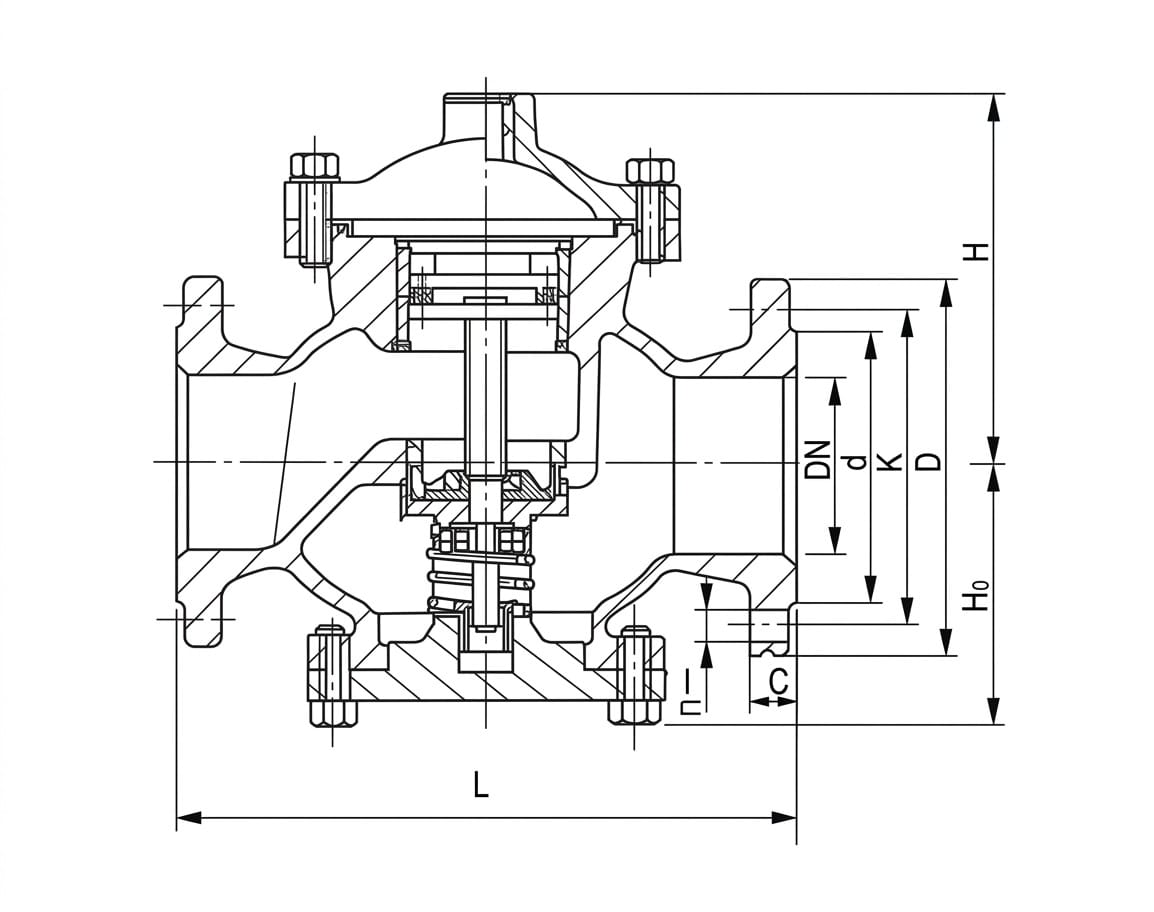
L = face-to-face, H = overall height, H1 = control chamber height, all in millimetres; weights in kilograms. Dimensions apply to the PN16 class. Certified drawings are issued with the quotation.
How the Boiler Return Check Valve Works
| Condition | What happens inside the valve | Result on the system |
|---|---|---|
| Feed pump running, return pressure above spring preload | Pressure lifts the disc off the seat against the spring | Return water flows to the boiler |
| Pump stops, pressure collapses | Spring returns the disc to the seat immediately | Reverse flow is cut off; boiler cannot overflow |
| Static line pressure below the set preload | Valve stays closed | Water column above the boiler is held |
| Sediment in the control chamber | Response slows and the disc may hang off its seat | Weeping or delayed closure – clean the passages at shutdown |
The setting matters more than the size. Order the valve against the actual pressure band of the return line: too stiff a spring and the valve chatters or never opens on a low-head system, too soft and it will not close positively when the pump trips. Give us the pump shut-off head and the static height and we will specify the spring.
Structure Drawing
Design & Manufacturing Standards
- Design Standard: GB/T 12236
- Face-to-Face Dimensions: GB/T 12221
- Flange Standards: GB/T 9113, JB/T 79, HG/T 20596
- Testing & Inspection: GB/T 13927, JB/T 9092
- Applicable International Standards: EN 13709, EN 558 (optional)
Installation & Maintenance Guidelines
- Body Material : Gray cast iron (H7B41X-16) / WCB cast steel (H7B41X-16C)
- Core Function : Automatically opens/closes with pipeline pressure changes to prevent boiler overflow and pump backflow
- Application Scenarios : Normal pressure boiler return water pipelines, water and oil pipeline systems
- Boiler Return Line Position: Install the valve on the return-water pipeline of natural-pressure boilers. The valve must be positioned where pipeline pressure fluctuations during normal pump operation and shutdown are clearly transmitted to the valve chamber.
- Flow Direction: Ensure medium flows in the direction indicated by the arrow cast on the valve body. Reverse installation will cause the valve to fail to open or close correctly.
- Horizontal Installation Preferred: Install the valve horizontally with the bonnet facing upward for optimal spring performance and disc movement. Avoid inverted or vertical orientations unless specifically approved.
- Pipeline Support: The valve body should not bear pipeline weight. Install independent support brackets, especially for DN125 and larger sizes, to prevent flange stress and distortion.
- Maintenance: Periodically inspect the disc, seat ring, and spring for wear, corrosion, or sediment buildup. Clean the control chamber passages to ensure sensitive pressure response. Replace the spring if preload force decreases.
- Set the spring to the system: commission against the measured return line pressure band, not the catalogue default, and record the setting on the valve tag.
- Keep the chamber clean: fit a strainer upstream on a return line carrying boiler sludge; the control passages are small and sediment is what makes these valves hang open.
Application Fields
This valve exists for one family of systems: Boiler Return Water Systems, Natural-Pressure Heating Circuits, Hot Water Distribution Networks, Petroleum Pipeline Protection, Industrial Circulating Water, HVAC & Building Heating. If your installation is a natural-pressure (gravity) heating circuit where the boiler sits below the return water level, the normally closed behaviour is the protection you need; on a pumped closed loop with no static head, it is unnecessary cost.
What We Need to Quote Your H7B41X Valves
- Size and quantity: DN40–DN200, PN16.
- System pressures: pump shut-off head, running return pressure, and static height above the boiler.
- Medium and temperature: return water or oil, to 70°C.
- Body material: gray cast iron (16Q) or WCB cast steel (16C).
- Spring setting: we can set and test to your band if you supply the pressures.
- Flange standard: GB/T 9113 as standard; EN 1092 or ASME on request.
- Documentation: test records and material certificates for the boiler circuit inspection.
Send the boiler and pump data or a sketch of the return line and we will confirm whether this pattern is required at all, and in which spring setting. Drawings are in the download center.
Frequently Asked Questions
Why is the valve normally closed instead of normally open?
On a gravity return system the water column above the boiler will drain down into it if the line is left open when the feed pump stops, and the boiler overflows. A normally closed valve cuts that path automatically. A conventional check valve is open at rest and can only stop flow moving backwards once flow has started.
What is the difference between hydraulic control and a solenoid valve here?
The H7B41X reacts to pipeline pressure through a spring and piston chamber, so it needs no electricity and no control signal – it does the right thing during a power failure, which is exactly when the protection is needed. A solenoid operated valve fails in whatever position its design dictates when supply is lost.
Can it be used on steam or hot condensate?
No. The soft seat facing in the control chamber limits this pattern to 70 degC. For hot condensate or steam backflow protection use a cast steel H41H lift check valve or a purpose-made steam trap.
How do I set the spring?
Against the measured return line pressure band: high enough that the valve opens reliably when the pump runs, low enough that it closes positively when pressure collapses. Give us the pump shut-off head and the static height and we will supply and test the correct spring rather than leaving it to field adjustment.
My existing valve is stamped H7B41X-16, your table says 16Q. Which is right?
Both refer to the PN16 cast iron body – the Q suffix marks the iron body grade and is often omitted on older nameplates. Send a photograph of the nameplate and we will match the pattern, face-to-face and spring setting.
What fails on these valves, and how do I avoid it?
Sediment. Boiler return water carries magnetite and sludge, and the control chamber passages are small enough to partly block, which slows closure or leaves the disc hanging off its seat. Strain the line, flush the chamber at each shutdown, and replace the spring when its free length falls below the specification.
Get a Quote & Technical Support
Contact Gaoshan Valve for spring settings, dimension drawings and a return-line assessment before you order. Reply within 24 hours from our overseas sales desk.