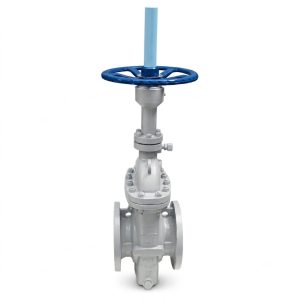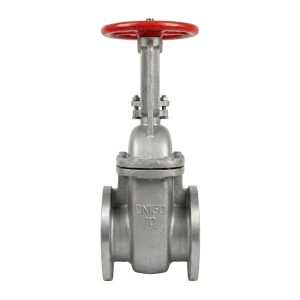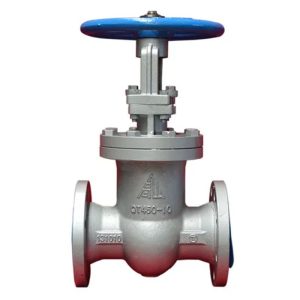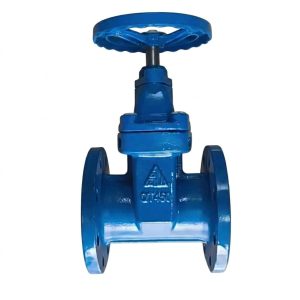
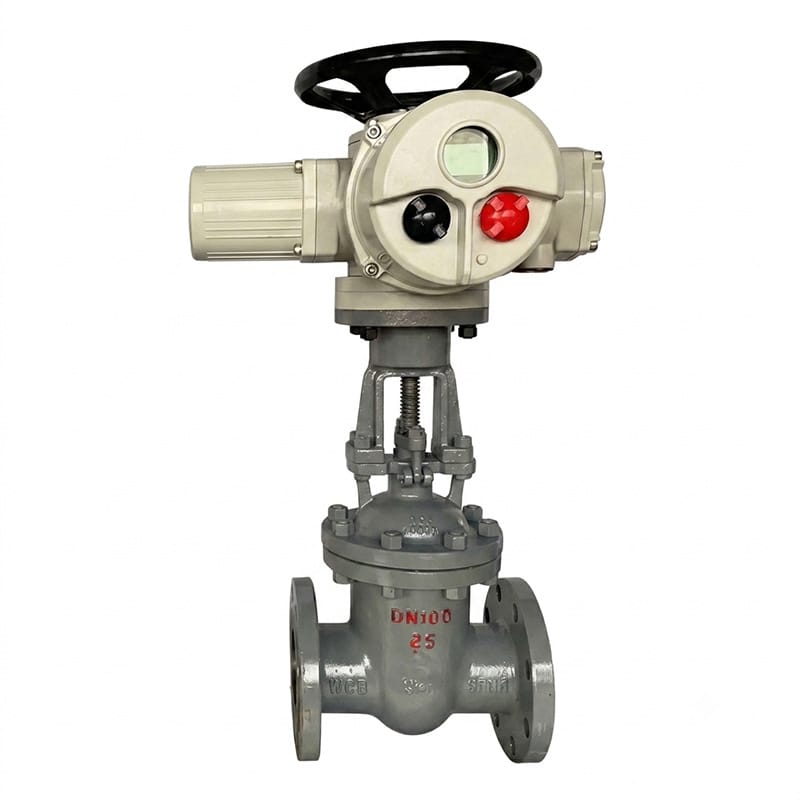
Z941H/Z941Y Motor Operated Wedge Gate Valve
The Z941H/Z941Y Motor Operated Wedge Gate Valve combines a proven hard-sealed wedge gate platform with a multi-turn electric actuator, enabling remote ON-OFF switching and 4–20mA modulating control for automated pipeline operations.
- Automation-ready: Actuator provides open/closed position feedback, torque sensing, and manual override; integrates easily with SCADA and DCS systems.
- Reliable sealing: Zero-leakage metal seat performance (2Cr13/Stellite) on the same body design as the Z41H/Y series.
- Wide pressure and temperature range: PN16 to PN100, up to 425°C (WCB) or 550°C (Cr-Mo steel).
- Material options: Ductile cast iron, WCB cast steel, or chrome-moly alloy; stainless steel (Z941W) available for corrosive media.
- Flanged ends, bolted bonnet: Compatible with global flange standards; easy access for packing inspection.
- Factory tested to API 598: Shell and seat pressure tests before shipment; full traceability and material certificates provided.
Contact Us for Pricing
Interested in this product? Contact us now for detailed pricing and product information.
Product Details
The Z941H and Z941Y motor operated wedge gate valves put a multi-turn electric actuator on the same hard-sealed flanged gate body as the manual Z41HY series, so a steam, water, oil or gas main can be stroked from a control room instead of by hand. The actuator is supplied for ON-OFF duty or with 4–20mA modulating control, with open/closed position feedback, torque sensing and a manual override. Coverage runs PN16 to PN100, DN40 to DN500, in ductile iron, WCB cast steel or chrome-moly alloy steel.
- Multi-turn electric actuator replaces the handwheel — ON-OFF switching or 4–20mA modulating control, with position feedback, torque sensing and manual override
- Same hard-sealed wedge body as the Z41HY series: 2Cr13 stainless seat on Z941H, Stellite hard-faced seat on Z941Y
- PN16 to PN100 and DN40 to DN500, to 425°C in WCB and 550°C in chrome-moly at PN16/PN25
- Four body platforms — QT450 ductile iron, WCB cast steel, chrome-moly alloy steel, plus the CF8 stainless Z941W for acids, alkalis and seawater
- Flanged ends compatible with global flange standards, bolted bonnet for packing and wedge inspection without cutting the line out
- Shell and seat tested to API 598 before shipment with material certificates and traceability; DCS/SCADA integration and smart-fieldbus options
Product Overview
The Z941HY combines the heavy-duty wedge gate valve body of the Z41HY series with an integral multi-turn electric actuator. That is the whole selection argument: the flow path, seats and bonnet are the proven manual valve, and the actuator adds remote or unattended operation without changing how the valve seals. The wedge gives a straight bore and a metal-to-metal seat; the actuator gives motorised travel, a set of signals the control system can use, and a hand override for the case where the supply is off.
Choose the seat facing before the class. Z941H carries a 2Cr13 stainless steel hard-faced seat for robust metal-to-metal sealing; Z941Y carries a Stellite hard-faced seat for erosion and corrosion resistance in severe service; Z941W is built with a CF8/CF8M stainless body and seat for acids, alkalis and seawater. Body material follows pressure and temperature: QT450 ductile iron for standard water duty, WCB cast steel for steam, oil, gas and high-pressure water, chrome-moly for high-temperature steam and thermal oil.
Be honest about what this valve is not. A wedge gate is an isolation element, so the modulating option moves the valve between its ends on a 4–20mA signal, but it does not turn the gate into a control valve — a gate held part open has the medium washing the exposed underside of the wedge. Where a line has to be regulated, put the Z941H upstream or downstream of a proper control element. Where the duty needs a valve that closes on loss of power with no stored energy, an electric actuator is the wrong answer: it stops where it stops, so a spring-return pneumatic design or a fast-acting valve belongs on that line. Electric actuation also assumes a power supply, a hazardous-area rating if the zone needs one, and a stroke time the process can accept.
What the Model Code Means
Z = gate valve, 9 = motor operated (multi-turn electric), 4 = flanged connection, 1 = rising-stem wedge-type rigid single gate, then the seat facing: H = chromium stainless steel, Y = hard alloy / Stellite, W = sealing surface in the body material. The digits after the dash are the PN class (16, 25, 40, 63, 100) and the trailing letter is the body: Q ductile iron, C WCB cast steel, I chrome-moly steel, P CF8 stainless. More on the Valve Model Decoder.
Core Strengths
Multi-Turn Electric Actuator Drive
Integral multi-turn electric actuator provides reliable motorized on/off control with position feedback, torque sensing, and manual override for fail-safe operation in unattended or remote installations.
Same Robust Hard-Sealed Seat as Z41HY Series
Inherits the proven 2Cr13 stainless steel or Stellite hard-faced wedge seat design from the manual Z41HY series, delivering identical zero-leakage metal-to-metal sealing performance under high pressure and temperature.
Wide Pressure & Temperature Coverage
Covers PN16 through PN100 with operating temperatures up to 425°C (WCB) or 550°C (Cr-Mo steel), making it suitable for critical steam, oil, and high-temperature process applications requiring automated control.
Remote Control & SCADA Integration Ready
Actuator supports ON-OFF switching, position indication, and optional 4–20mA modulating control. Easily interfaced with DCS/SCADA systems for centralized pipeline automation and remote monitoring.
Flanged Ends, Bolted Bonnet, Serviceable Body
The ends are flanged for compatibility with global flange standards and the bonnet is bolted, so stem packing can be inspected and the wedge reached without removing the valve from the line. On a motorised main that matters: the annual packing check described in the installation notes is a gland job, not an outage.
Tested, Documented and Configurable at the Actuator
Every valve undergoes shell and seat pressure testing before shipment per API 598, with material certificates and full traceability supplied. Above the body, the actuator is selected to the duty: ON-OFF, 4–20mA modulating or smart-fieldbus control, on AC 380V, 220V or 440V at 50/60Hz. Tell us the zone classification and the signals your DCS expects and the actuator is quoted to match.
Model Selection Guide
| Model | Body / Bonnet Material | Seat Surface | Max Temp. | Typical Application |
|---|---|---|---|---|
| Z941H-16Q / 25Q | Ductile Cast Iron (QT450) | 2Cr13 Stainless Steel | ≤350°C | Water, general oil |
| Z941H-16C / 25 / 40 / 63 / 100 | WCB Cast Steel | 2Cr13 Stainless Steel | ≤425°C | Steam, oil, gas, high-pressure water |
| Z941Y-16I / 25I | Chrome-Moly Alloy Steel | Stellite Hard-Faced | ≤550°C | High-temperature steam, thermal oil |
| Z941W-16P / 25P | CF8 Stainless Steel | CF8 Stainless Steel | ≤200°C | Corrosive media: acid, alkali, seawater |
The temperature ceilings are printed against each model and are set by the body material rather than the actuator: 350°C on ductile iron, 425°C on WCB, 550°C on chrome-moly, 200°C on the CF8 stainless Z941W. Note where the chrome-moly rating sits: the 550°C figure appears only against the PN16 and PN25 classes in the pressure table below, so a high-temperature, high-class line is a quotation question rather than a catalogue pick.
Performance Specifications
| Pressure Class | Nominal Pressure (MPa) | Shell Test Pressure (MPa) | Seal Test Pressure (MPa) | Max Working Temp. |
|---|---|---|---|---|
| PN16 | 1.6 | 2.4 | 1.76 | ≤350°C (DI) / ≤425°C (WCB) / ≤550°C (Cr-Mo) |
| PN25 | 2.5 | 3.75 | 2.75 | ≤350°C (DI) / ≤425°C (WCB) / ≤550°C (Cr-Mo) |
| PN40 | 4.0 | 6.0 | 4.4 | ≤425°C (WCB) |
| PN63 | 6.3 | 9.45 | 6.93 | ≤425°C (WCB) |
| PN100 | 10.0 | 15.0 | 11.0 | ≤425°C (WCB) |
Every class row on this page follows the same test convention: shell test at 1.5x and seal test at 1.1x the nominal pressure, so PN16 is proof tested at 2.4 / 1.76 MPa and PN100 at 15.0 / 11.0 MPa. Test certificates are issued against the class you order; state the standard your inspector wants (GB/T 13927, API 598 or ISO 5208) with the enquiry.
Main Component Materials
Main body materials are identical to the Z41HY series, so the part-by-part specification below can be read straight across to the manual Z41H-16Q / 16C / 25 / 40 / 63 / 100 and Z41Y-16I / 25I valves. The stainless Z941W-16P / 25P variant is not covered by this table; its CF8 body and seat are confirmed on the enquiry.
| Part Name | Z941H-16Q / 25Q | Z941H-16C / 25 / 40 / 63 / 100 | Z941Y-16I / 25I |
|---|---|---|---|
| Body / Bonnet | Ductile Cast Iron (QT450) | WCB Cast Steel | Chrome-Moly Alloy Steel |
| Disc / Wedge | 2Cr13 Stainless Steel | 2Cr13 Stainless Steel | 2Cr13 + Stellite Overlay |
| Seat Ring | 2Cr13 Stainless Steel | 2Cr13 Stainless Steel | Stellite Hard-Faced |
| Stem | 2Cr13 Stainless Steel | 2Cr13 Stainless Steel | 2Cr13 Stainless Steel |
| Stem Nut | Aluminium Bronze | Aluminium Bronze | Aluminium Bronze |
| Packing | Expanded Graphite | Expanded Graphite | Expanded Graphite |
| Actuator | Multi-Turn Electric Actuator | Multi-Turn Electric Actuator | Multi-Turn Electric Actuator |
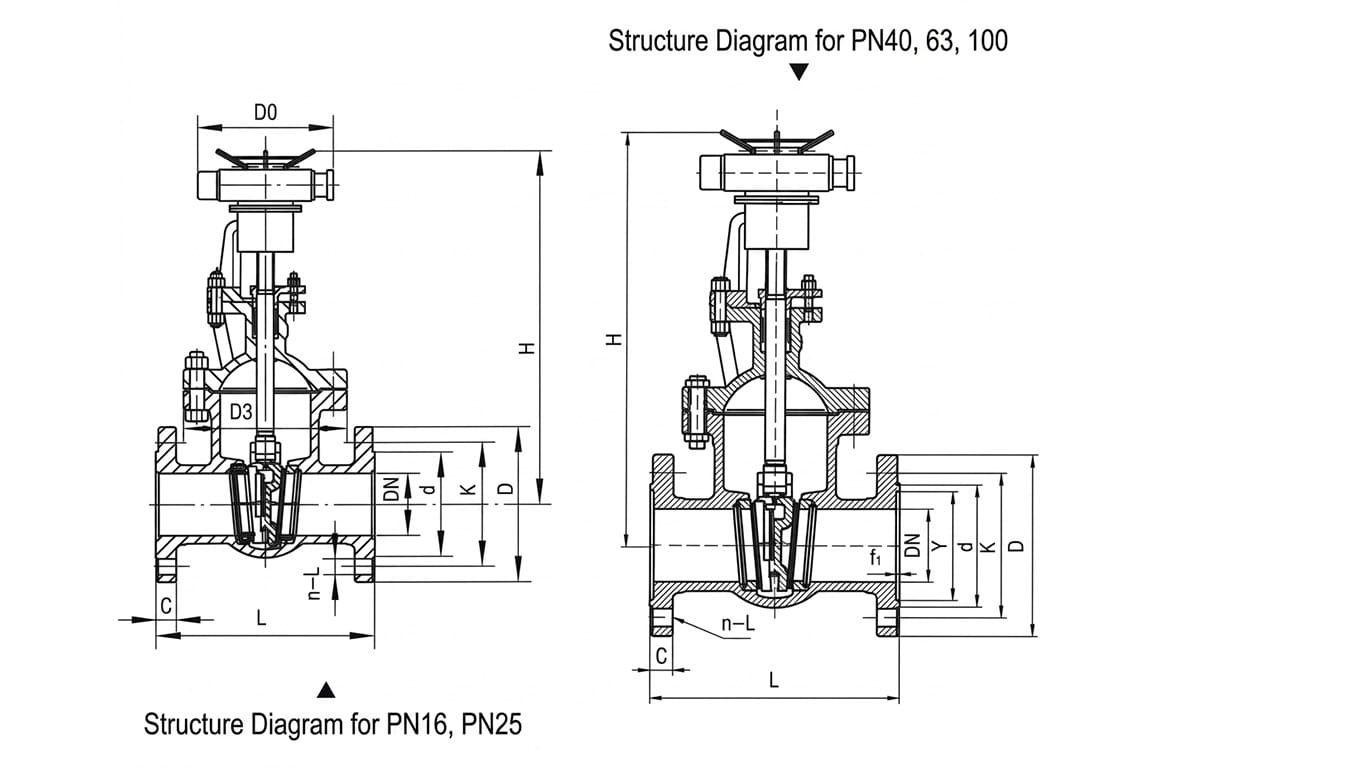
Main Dimensions & Weights
Face-to-face length, overall height and weight by pressure class. H is the total height including the electric actuator and D0 is the actuator head diameter, so the height figure already contains the drive — check it against the platform or ceiling above the valve before ordering. Dimensions are reference values; certified dimensional drawings, confirmed weights and non-standard sizes are issued with the quotation.
PN16 — DN40 to DN200
| DN | L (mm) | H (mm) | D0 (mm) | Weight (kg) |
|---|---|---|---|---|
| 40 | 240 | 602 | 300 | 68 |
| 50 | 250 | 610 | 300 | 69 |
| 65 | 270 | 612 | 300 | 80 |
| 80 | 280 | 690 | 300 | 83 |
| 100 | 300 | 833 | 300 | 94 |
| 125 | 325 | 876 | 300 | 125 |
| 150 | 350 | 958 | 300 | 160 |
| 200 | 400 | 1096 | 300 | 225 |
PN16 — DN250 to DN500
| DN | L (mm) | H (mm) | D0 (mm) | Weight (kg) |
|---|---|---|---|---|
| 250 | 450 | 1244 | 300 | 348 |
| 300 | 500 | 1430 | 400 | 485 |
| 350 | 550 | 1565 | 400 | 696 |
| 400 | 600 | 1735 | 400 | 1000 |
| 500 | 700 | 1961 | 400 | 1064 |
DN40 is listed only on the PN16 and PN25 tables, and the D0 actuator head diameter is printed for those two classes alone; PN40 to PN100 start at DN50.
PN25 — DN40 to DN200
| DN | L (mm) | H (mm) | D0 (mm) | Weight (kg) |
|---|---|---|---|---|
| 40 | 240 | 602 | 300 | 68 |
| 50 | 250 | 610 | 300 | 69 |
| 65 | 270 | 612 | 300 | 80 |
| 80 | 280 | 690 | 300 | 83 |
| 100 | 300 | 833 | 300 | 94 |
| 125 | 325 | 876 | 300 | 125 |
| 150 | 350 | 958 | 300 | 160 |
| 200 | 400 | 1096 | 300 | 225 |
PN25 — DN250 to DN500
| DN | L (mm) | H (mm) | D0 (mm) | Weight (kg) |
|---|---|---|---|---|
| 250 | 450 | 1244 | 300 | 348 |
| 300 | 500 | 1430 | 400 | 485 |
| 350 | 550 | 1565 | 400 | 696 |
| 400 | 600 | 1735 | 400 | 1000 |
| 500 | 700 | 1961 | 400 | 1064 |
The reference figures published for PN25 on this page are identical to the PN16 set, from DN40 to DN500, including weight; confirm the class-specific drawing before pipe fabrication.
PN40
| DN | L (mm) | H (mm) | D0 (mm) | Weight (kg) |
|---|---|---|---|---|
| 50 | 250 | 615 | — | 49 |
| 65 | 280 | 630 | — | 65 |
| 80 | 310 | 690 | — | 140 |
| 100 | 350 | 803 | — | 160 |
| 125 | 400 | 910 | — | 213 |
| 150 | 450 | 985 | — | 239 |
| 200 | 550 | 1132 | — | 366 |
| 250 | 650 | 1331 | — | 517 |
| 300 | 750 | 1470 | — | 825 |
| 350 | 850 | 1740 | — | 1029 |
| 400 | 950 | 1859 | — | 1433 |
| 500 | — | 2450 | — | 2130 |
D0 is not printed on the PN40 table and DN500 has no face-to-face figure.
PN63
| DN | L (mm) | H (mm) | D0 (mm) | Weight (kg) |
|---|---|---|---|---|
| 50 | 250 | 615 | — | 49 |
| 65 | 280 | 630 | — | 65 |
| 80 | 310 | 695 | — | 140 |
| 100 | 350 | 791 | — | 160 |
| 125 | 400 | 868 | — | 200 |
| 150 | 450 | 995 | — | 300 |
| 200 | 550 | 1192 | — | 480 |
| 250 | 650 | 1403 | — | 698 |
| 300 | 750 | 1707 | — | 761 |
| 350 | 850 | 2084 | — | 1135 |
| 400 | 950 | 2238 | — | 1948 |
PN63 tops out at DN400 on this series, with no D0 figure.
PN100
| DN | L (mm) | H (mm) | D0 (mm) | Weight (kg) |
|---|---|---|---|---|
| 50 | 250 | 680 | — | 150 |
| 65 | 280 | 730 | — | 180 |
| 80 | 310 | 795 | — | 190 |
| 100 | 350 | 880 | — | 300 |
| 125 | 400 | 943 | — | 444 |
| 150 | 450 | 1232 | — | 440 |
| 200 | 550 | 1324 | — | 480 |
| 250 | 650 | 1470 | — | 803 |
| 300 | 750 | 1830 | — | 1568 |
| 350 | 850 | 2185 | — | 1510 |
PN100 is listed from DN50 to DN350, with no D0 figure.
Blank cells mean the page does not publish that figure, not that the valve is unavailable. Send the class and size and we will confirm the drawing, the weight and the actuator headroom in writing.
Electric, Pneumatic or Worm Gear: How to Drive the Gate
| Decision point | Multi-turn electric (Z941H / Z941Y) | Worm gear / bevel handwheel | Pneumatic actuator |
|---|---|---|---|
| Stroke time | Set by the actuator gear ratio — multi-turn drives are slow on a rising-stem gate; size the stroke time into the process, not the other way round | Operator dependent; the slowest option on a large bore, where the gear reduction is there to make the torque humanly possible | Fastest of the three on quarter-turn duty; multi-turn pneumatic racks exist but are rarely the reason a plant buys air |
| Thrust at the wedge | Sized to the class and bore at selection, with torque sensing to protect the seat | Whatever the operator can hold on the handwheel, multiplied by the gear ratio | Sized by supply pressure and cylinder area; the air supply has to be there when the valve has to move |
| Utility needed | AC 380V, 220V or 440V at 50/60Hz per this page’s installation notes, plus the control signals | None — the reason it stays on the list for a manually attended station | Clean, dry instrument air; moisture is what ruins pneumatic actuators |
| Signals to the control system | Open/closed position feedback, torque sensing, 4–20mA modulating or smart-fieldbus options; native fit for DCS and SCADA | Nothing unless you add switches to the gearcase | Limit switches and solenoid pilots; modulating needs a positioner |
| Behaviour when the utility fails | Stops where it stops. Manual override lets operators stroke it; a battery or capacitor backup is an actuator option, not a property of the valve | Nothing to fail; the valve stays where it was left | Spring-return designs fail open or closed by intent; double-acting ones stay put |
| Enclosure and area classification | Keep the enclosure sealed against moisture and run the heater in humid service; the IP code and any flameproof or increased-safety rating are specified per your datasheet and area classification at enquiry | No electrical equipment to certify, which is its own advantage in a hazardous area | Air-borne; the solenoid and switches are the only electrical items to certify |
| Cost and upkeep | Highest purchase price of the three; maintenance is the actuator — limit and torque switch checks, override tests, enclosure and heater checks, plus the annual packing inspection | Lowest cost; grease the gear and check the seat | Between the two; needs air preparation and seal kits |
| When to look elsewhere | No power at the valve, a stroke that must finish against a spring, or a modulating duty that really needs a globe or control valve instead | The valve is stroked by hand less than a few times a month and nobody needs to know where it is | Air is already at every rack and fail-safe action is a process requirement |
If the deciding factor is simply that a handwheel is too far away or too hard, the cheaper answer on this site is a geared valve such as the Q341F worm gear operated ball valve, and if it is a fast shut-off on compressed air, look at the Q641F pneumatic ball valve before buying a multi-turn electric actuator for a slow-isolation pattern.
Structure Drawing
Design & Manufacturing Standards
- Design: GB/T 12234, API 600, ASME B16.34, BS 1414, DIN 3352
- Face-to-face, end flange and pressure–temperature reference: ASME B16.34, ANSI B16.5
- Testing and inspection: GB/T 13927, API 598, ISO 5208
These are the nine standards listed against this series on this page; nothing has been added. Tell us which one your specification is written against — the class, size and test standard together — and the applicable one is confirmed on the quotation rather than assumed from a catalogue.
Installation & Maintenance Guidelines
- Flow direction and clearance: Install with flow direction as marked on the valve body. Ensure adequate overhead clearance for the electric actuator during installation and maintenance.
- Flange faces: Ensure flange mating surfaces are clean and free of scratches before bolting. Use gaskets compatible with the operating medium and temperature.
- Lifting: Do not lift the valve by the actuator. Always lift by the valve body using proper slings to avoid actuator or stem damage.
- First energisation: Before first operation, verify actuator power supply (typically AC 380V / 220V / 440V, 50/60Hz) and confirm correct phase rotation for proper open/close direction.
- Thermal shock: For high-temperature steam service (Z941H-40/63/100 and Z941Y series), perform a slow warm-up before full-pressure operation to prevent thermal shock to the actuator mounting.
- Stem packing: Inspect stem packing annually and retighten the gland bolts evenly if minor leakage is observed. Replace packing when retightening no longer achieves seal.
- Actuator enclosure: Keep the actuator enclosure sealed and protected from moisture ingress. Verify the heater or dehumidifier function in humid environments to prevent internal condensation.
- Override and switch testing: Periodically test the manual override function and check limit switch / torque switch settings to ensure reliable remote operation and over-travel protection.
Cycle the valve under actuator control after commissioning and confirm the limit and torque settings against the seat, not against the counter: over-travel is how a motorised gate damages the very metal seat it was bought for.
Application Fields
The Z941HY family is specified where a plant wants its isolation valves inside the control system rather than on a pipe rack that someone walks: Power Plant Steam & Feedwater Automation Systems, Petrochemical Refinery Remote Process Control, Oil & Gas Pipeline Pump Station & Terminal Automation, Chemical Processing & Fertilizer Plant DCS Integration, Municipal Water Supply SCADA-Controlled Distribution, Steel Mill Cooling Water & High-Pressure Hydraulic Systems, Shipbuilding & Marine Engine Remote Valve Control, Thermal Power & Cogeneration CEMS-Linked Facilities.
Across those duties the medium stays inside the list printed on this page — water, steam, oil, gas, non-corrosive fluids and high-temperature media — and the corrosive services in that group belong to the CF8 Z941W variant rather than to a carbon steel body.
What We Need to Quote Your Z941H / Z941Y Valves
- Class and size: PN16 to PN100, DN40 to DN500 — the tables list DN40 on PN16 and PN25 only, and DN500 up to PN40.
- Medium and temperature: water, steam, oil, gas or high-temperature media; chrome-moly is quoted where the page’s 550°C figure applies.
- Seat facing: 2Cr13 (Z941H), Stellite hard-faced (Z941Y) or CF8 stainless (Z941W).
- Actuator duty: ON-OFF or 4–20mA modulating or smart fieldbus; supply voltage and frequency; required stroke time; area classification and IP code.
- Signals: position feedback, torque switch, remote/local, fail action and any battery backup.
- Flange standard and facing, plus the space available above the valve for H including the actuator.
- Documentation: API 598 test records, material certificates, witnessed testing for tenders.
Send a valve schedule and we will return the correct class, seat facing and actuator for each line, including an honest no when the duty wants a globe or a spring-return design instead. Drawings and catalogues are in the download center and the audit trail is on the certifications page. Related patterns in the same group: Z45T bronze seat gate valve, Z45X rubber resilient seated gate valve and RZ47F gas plate gate valve.
Frequently Asked Questions
Can a Z941H gate valve throttle the flow?
No. The wedge is an isolation element: held part open, the medium washes the exposed underside of the wedge and the seats, and a metal-seated gate never seals properly again. The 4-20mA modulating actuator option lets the control system position the valve, which is useful for sequencing and for slow, surge-free stroke, but for genuine flow regulation use a globe valve or a control valve and let the gate isolate it.
What happens to the valve when the power fails?
It stays where it was. A multi-turn electric actuator has no stored energy, so there is no fail-open or fail-closed action unless you specify a battery or capacitor backup or a manual override that someone reaches. That is the correct answer on most isolation mains and the wrong answer on a line where loss of power must move the valve – there a spring-return pneumatic actuator or a fast-acting valve belongs. The integral hand override is a running aid for commissioning and upset, not a substitute for a fail-safe design.
Z941H, Z941Y or Z941W – how do I pick?
By seat facing and body, in that order. Z941H uses a 2Cr13 stainless hard-faced seat for general metal-to-metal sealing on ductile iron or WCB bodies. Z941Y moves to a Stellite hard-faced seat on a chrome-moly body, which the page rates to 550 degC at PN16/PN25 for high-temperature steam and thermal oil. Z941W is a CF8 stainless body and seat for acids, alkalis and seawater. If the medium is corrosive, the answer is never a coating on a carbon steel body – it is the stainless variant.
What supply and signals does the actuator need?
The installation notes on this page list AC 380V, 220V or 440V at 50/60Hz, with correct phase rotation checked before first operation so open and close are not reversed. The actuator reports open/closed position and torque and accepts an ON-OFF or 4-20mA signal, with smart-fieldbus control as an option. IP code and any flameproof or increased-safety certification are actuator options – send the area classification with the enquiry rather than assuming a rating.
Why are the PN16 and PN25 dimension tables identical, and why are some cells blank?
Both reference tables on this page publish the same face-to-face, height and weight figures from DN40 to DN500, and D0 is printed only for those two classes; the PN40 table also has no face-to-face value at DN500. Treat the tables as a layout guide and work from the certified drawing for your actual class and size, which we issue with the quotation.
Can an actuator be fitted to the manual Z41HY valve already in the line?
That is the practical appeal of this series: the body and its main materials are identical to the Z41HY manual valve, so the gate itself is unchanged. What has to be matched is the actuator – thrust, gear ratio, stem nut and turning direction, plus bonnet flange interface and headroom for H with the drive on top. Send the nameplate data and a photo of the clearance and we will confirm before quoting.
Gaoshan Valve has manufactured industrial valves since 1975 and holds ISO 9001/14001/45001 with CE, API 6D and PED product certification. It is an approved supplier to Sinopec, CNPC and State Grid and exports to more than 30 countries, supplying water utilities, power plants and EPC contractors.
Get a Quote & Technical Support
We supply Z941H, Z941Y and Z941W motor operated gate valves across every pressure class and size on this page, with ON-OFF, modulating and smart-fieldbus actuator options, OEM customisation, material certificates and pressure test reports. Reply within one business day.