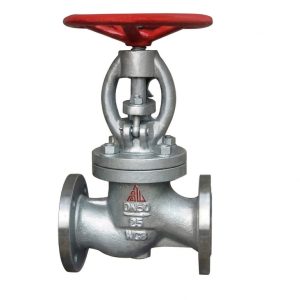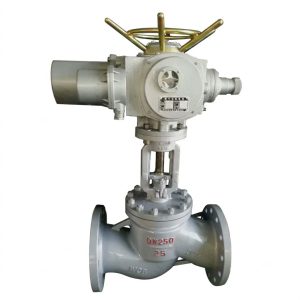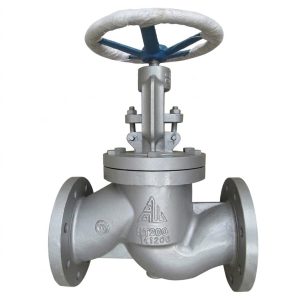
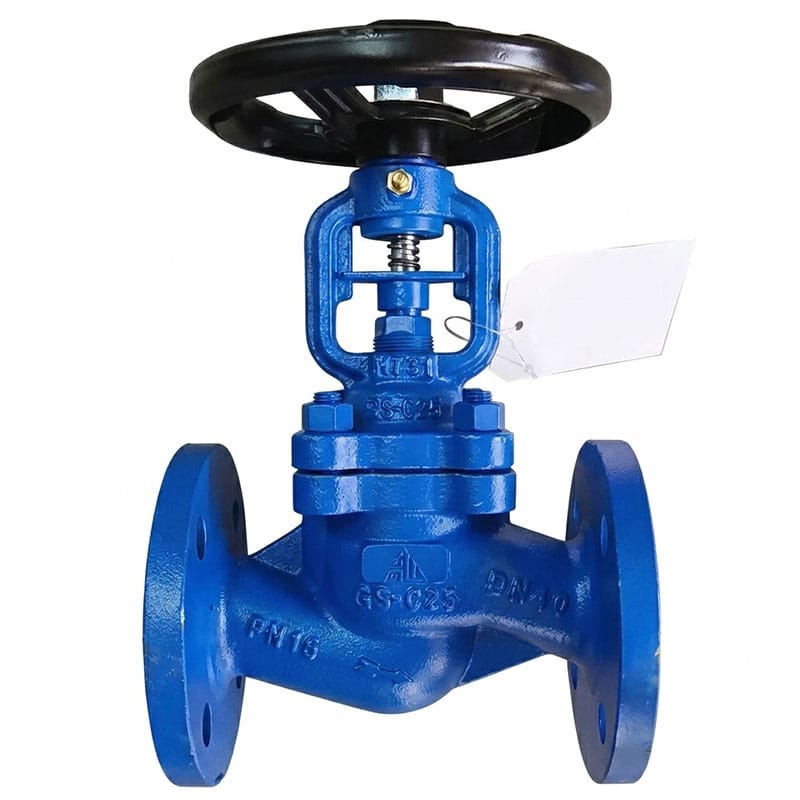
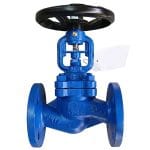

WJ41H Bellows Sealed Globe Valve
WJ41H bellows sealed globe valve for zero stem-leak steam, water & oil service, PN16–PN25. Double seal: austenitic stainless steel bellows primary + flexible graphite packing secondary. Carbon steel WCB body, 2Cr13 chrome stainless steel stem & disc, DN25–DN150. Maintenance-free bellows eliminates routine packing adjustments — ideal for fugitive emission control. Rising stem design with hard alloy seat surfacing option for demanding high-temperature applications.
Contact Us for Pricing
Interested in this product? Contact us now for detailed pricing and product information.
Product Details
The WJ41H bellows sealed globe valve exists for the one leak path a packed valve can never quite close: the stem. An austenitic stainless steel bellows is welded between stem and bonnet to seal that space off completely, with a flexible graphite packing gland behind it as a second, independent barrier. It is a flanged WCB straight-pattern globe for steam, water, oil and non-corrosive media at PN16 and PN25, DN25 to DN150, to 425°C, on a rising stem that shows its position at a glance.
- Zero stem leakage — austenitic stainless steel bellows welded between stem and bonnet as the primary seal
- Double barrier: flexible graphite packing gland behind the bellows holds the valve leak-tight even if the bellows is damaged
- Maintenance-free primary seal for the rated cycle life of the bellows element — no routine gland adjustment
- WCB carbon steel body and bonnet, 2Cr13 chrome stainless stem and disc, hard alloy seat surfacing optional
- PN16 / PN25, DN25–DN150, flanged ends, rising stem with visible open/closed indication
- Standards listed for this series include ISO 15848-1 and TA-Luft alongside GB/T 12235, GB/T 13927 and API 598 for fugitive-emission and steam duties
Product Overview
Overseas this is specified as a bellows sealed (bellows seal) globe valve; the zero stem-leakage claim is demonstrated by fugitive-emission testing to ISO 15848-1 / TA-Luft, available on request.
Conventional globe valves hold the stem with gland packing. That seal works, and it also weeps a little, dries out, needs retightening and releases what it was holding. The WJ41H removes the trade-off: the bellows is a welded metallic sleeve that flexes with the stem and closes the packing chamber hermetically, so the only sealing surface that matters at the stem is a weld. The graphite gland behind it is a backup, not the working seal, and it is what keeps the line alive if the bellows ever fails.
Selection is by pressure class and service temperature rather than by the emission argument, which is the same on both: WJ41H-16C for general PN16 water, steam and non-corrosive media, WJ41H-25 where the system runs at PN25. The body is WCB carbon steel to 425°C, the stem and disc face are 2Cr13 chrome stainless, and hard alloy surfacing is optional on the seat for demanding steam and high-temperature oil duty. The rising stem doubles as the position indicator, which is worth something on a steam header where an operator confirms state from the floor.
Where it does not belong: this is a PN16/PN25 series in DN25 to DN150, so high-class or large-bore lines go elsewhere in the range, and the page’s media list is water, steam, oil & petroleum and non-corrosive media — a corrosive service needs a stainless valve, not a carbon steel body behind a stainless bellows. The straight globe pattern also costs pressure drop that a gate or ball valve would not, and where a line is only ever opened and shut with no emission concern, packing is cheaper. Bellows valves are chosen for what they do not leak, and that is the thing worth paying for.
What the Model Code Means
W = bellows sealed stem (prefix on the globe valve code), J = globe valve, 4 = flanged connection, 1 = straight-pattern globe disc, H = chromium stainless steel sealing face; -16C is the PN16 class with a WCB cast steel body and -25 the PN25 class. Decode the system across our range in the Valve Model Decoder.
Core Strengths
Double Seal — Bellows + Packing
Austenitic stainless steel bellows provides the primary stem seal, backed up by a secondary flexible graphite packing gland — effectively eliminating fugitive stem emissions. Ideal for hazardous media where zero-leak stem sealing is mandatory.
Long Fatigue Life Bellows Element
The bellows element is engineered for a high cycle life, absorbing stem movement without cracking or fatigue. This eliminates the routine stem packing maintenance required on conventional globe valves.
Robust Carbon Steel Construction
WCB carbon steel body and bonnet provide excellent structural strength and durability for PN16/PN25 service. Hard alloy seat surfacing option available for extended wear life on steam and high-velocity applications.
Flexible Graphite Backup Packing
Secondary flexible graphite packing serves as an emergency seal — even in the unlikely event of bellows failure, the valve remains leak-tight at the stem. This dual-barrier design ensures operational safety in critical service.
Rising Stem That Shows the Position
The stem rises through the bellows and the gland, so open and closed are visible from the floor without a switch or a look at the DCS. The page’s installation notes ask for clearance above the handwheel for the full stroke, which is the one physical consequence of that design worth checking against the platform before ordering.
A Globe Pattern You Can Actually Regulate With
Unlike a gate valve, the disc in this body travels into the flow path, so partial positions are usable and the valve can take a throttling duty. It is directional: the installation notes require flow to match the arrow cast on the body, because a globe fitted backwards will not seal properly. DN25 to DN150 in PN16 and PN25, with handwheel diameters from 140 to 400 mm across the size range.
Performance Specifications
| Model | Nominal Pressure PN (MPa) | Working Pressure (MPa) | Shell Test (MPa) | Seal Test (MPa) | Max Temp. (°C) | Body Material |
|---|---|---|---|---|---|---|
| WJ41H-16C | 1.6 | 1.6 | 2.4 | 1.8 | 425 | WCB Carbon Steel |
| WJ41H-25 | 2.5 | 2.5 | 3.8 | 2.8 | 425 | WCB Carbon Steel |
The test figures follow the rule stated on this page — shell test at 1.5x PN and seal test at 1.1x PN — with the values rounded as printed: 2.4 / 1.8 MPa for WJ41H-16C and 3.8 / 2.8 MPa for WJ41H-25. The 425°C ceiling is the standard WCB body figure, and the applicable medium is water, steam, oil and non-corrosive media. State the fugitive-emission test you need with the enquiry; the standards listed for this series include ISO 15848-1 and TA-Luft, and the qualification class is confirmed against your specification rather than assumed.
Main Component Materials
| NO | Part Name | Material |
|---|---|---|
| 1 | Valve Body, Bonnet | WCB Carbon Steel |
| 2 | Disc / Sealing Surface | 2Cr13 Chrome Stainless Steel (Hard Alloy Surfacing Optional) |
| 3 | Valve Stem | 2Cr13 Chrome Stainless Steel |
| 4 | Bellows Element | Austenitic Stainless Steel |
| 5 | Packing (Secondary Seal) | Flexible Graphite |
| 6 | Handwheel | Ductile Cast Iron |
The leak-tight claim rests on parts 4 and 5 working in series: the austenitic stainless bellows carries the service, and the flexible graphite packing is the second barrier that holds the stem while a damaged bellows is being planned out of the plant. Hard alloy surfacing on the disc face is the option that extends seat life on high-velocity steam, where the throttling action is also the thing that erodes a plain face.
Main Dimensions — Flanged
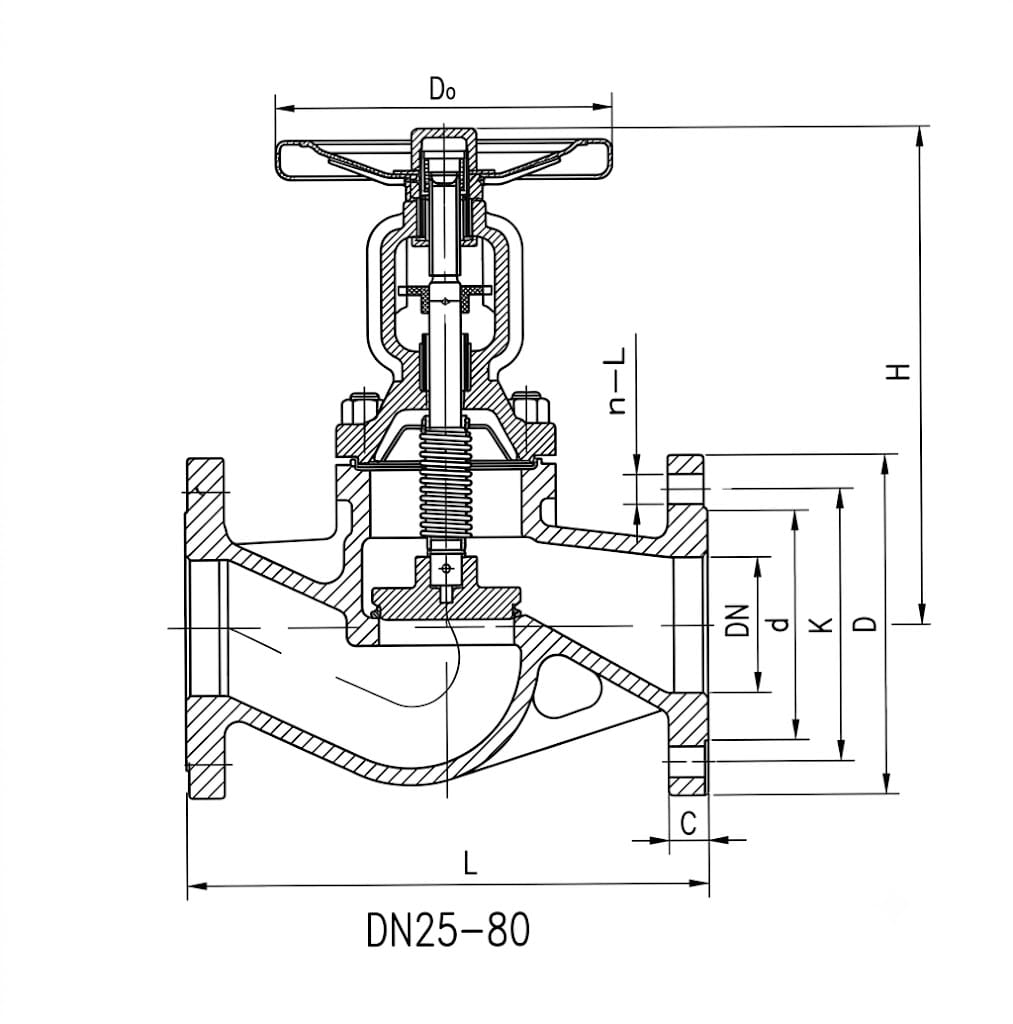
| DN (mm) | L (mm) | H (mm) | D0 (mm) |
|---|---|---|---|
| 25 | 160 | 222 | 140 |
| 32 | 180 | 222 | 140 |
| 40 | 200 | 275 | 200 |
| 50 | 230 | 275 | 200 |
| 65 | 290 | 282 | 250 |
| 80 | 310 | 292 | 250 |
| 100 | 350 | 425 | 320 |
| 125 | 400 | 507 | 400 |
| 150 | 480 | 550 | 400 |
L is the face-to-face length, H the handwheel centre height and D0 the handwheel diameter, as printed on the page. These are the WJ41H-16C reference figures; PN25 dimensional drawings are issued on request, and flange connection dimensions follow the flange dimension table in the catalogue (page P95). No weights are published for this series, so they are quoted from the confirmed drawing rather than estimated.
Bellows Sealed, Packed Globe or Gate Valve
| Decision point | WJ41H bellows sealed globe (this page) | J41H(Y) packed globe | Gate valve |
|---|---|---|---|
| Stem emission path | Bellows welds the packing chamber shut; the gland is backup only, so the normal leak path is removed rather than tightened | Packing is the working seal: it weeps, is retightened, and is the routine fugitive source on a steam plant | Same packing exposure as any packed valve; the taller bonnet gives more stem to leak past |
| Maintenance cost | No routine gland adjustment for the rated bellows cycle life; the cost lands at overhaul, when the bellows assembly is renewed rather than repacked | Cheapest to buy, most expensive to keep: periodic gland tightening and repacking between shutdowns | Packing only; a valve that sits closed for years needs cycling, not repacking |
| Throttling | Yes — the globe disc travels into the flow path, so part-open positions are usable, which is what makes it the steam trap bypass, desuperheating and heating-circuit valve | Yes, same pattern; the emission behaviour is the only difference | No — held part open, the medium cuts the underside of the wedge and the seats and the valve never seals cleanly again |
| Pressure drop | Highest of the three: a globe path turns the flow twice even wide open | Same as the WJ41H | Lowest — a straight bore, which is why mains isolation uses gates |
| Headroom above the valve | Rising stem plus handwheel; H in the table is handwheel centre height | Same rising stem requirement | Rising stem gates need the most; the non-rising Z45T needs none |
| When it is the wrong valve | Corrosive media, above PN25, above 425°C, above DN150, or a line that is only ever opened and shut with no emission concern | Any service where stem leakage is a safety, environmental or product-quality problem | Any service needing regulation, or where stem leakage of a packed bonnet is unacceptable |
If the plant needs the same bellows barrier on a hot, high-flow or automated line, the neighbours in the range are the J41H(Y) packed globe where emission control is not the driver, the J941H / J941Y electric globe valve when regulating duty has to be remote, and the Z941H motor operated gate valve when the job is isolation of a large main, not control of it. Gas service belongs on the RJ41F gas globe valve, and the wider selection is in the globe valve series index.
Structure Drawing
Design & Manufacturing Standards
- Design: GB/T 12235
- Valve parts / bonnet: GB/T 12224
- Testing and inspection: GB/T 13927, API 598, ISO 5208
- Fugitive emission standards listed for this series: ISO 15848-1, TA-Luft
ISO 15848-1 and TA-Luft are listed against this series on this page, which is the honest extent of the claim: certification is by test programme, class and temperature, so send the emission requirement you have to meet and we will confirm what the valve and its bellows assembly are tested to, together with the shell and seat test record, before the order.
Installation & Maintenance Guidelines
- Flow direction: Install with flow direction matching the arrow cast on the valve body — globe valves are directional and will not seal properly if reversed.
- Never touch the bellows: The bellows element is a welded, maintenance-free primary seal. Do not attempt to disassemble or adjust the bellows — this can damage the hermetic weld.
- Watch the backup gland: Periodically inspect the secondary packing gland for any signs of media leakage, which would indicate bellows damage. Tighten packing gland evenly if needed — but do not over-tighten.
- Steam service: For steam service, install a steam trap downstream to prevent condensate hammer and thermal shock to the bellows element.
- Stem clearance: Allow adequate clearance above the handwheel for full stem travel. The rising stem provides visual open/close position indication.
- Leak rate is the diagnostic: packing that weeps on a bellows valve means the bellows has failed. Treat it as an element replacement to be planned, not a gland to be overtightened — over-tightening restricts the stem and destroys the bellows faster.
- Spare the assembly, not the packing: order the bellows and stem set with the valve for critical lines, since renewal is an element swap rather than a machining job.
- Commission the stroke: cycle the valve from closed to the position your operators will use and back, checking the handwheel does not foul the platform or lagging over the full rising-stem travel.
Application Fields
This series earns its cost where a leaking stem is a problem rather than an annoyance: Steam Distribution Networks & District Heating Systems; Thermal Oil Heat Transfer & Hot Oil Circulation Loops; Chemical & Petrochemical Transfer Lines (Non-Corrosive); Pharmaceutical & Food-Grade Process Piping; Hazardous Media Service Requiring Fugitive Emission Control; Boiler Feedwater, Condensate Return & High-Purity Water Systems. In every one of those the medium stays within the page’s list — water, steam, oil & petroleum and non-corrosive media — and the common thread is that the valve is stroked often enough that a packed gland would be on a maintenance cycle forever.
What We Need to Quote Your WJ41H Valves
- Class and size: WJ41H-16C (PN16) or WJ41H-25 (PN25), DN25–DN150.
- Medium and temperature: water, steam, oil & petroleum or non-corrosive media, up to 425°C on the WCB body.
- Duty: isolation or regulation, and the normal position of the disc if it is a throttling application — that decides whether the optional hard alloy seat surfacing belongs on the valve.
- Emission requirement: the standard and class you must meet; ISO 15848-1 and TA-Luft are listed against this series and the applicable test is confirmed with the quotation.
- Flange standard and facing, and the clearance above the handwheel for full rising-stem travel.
- Steam specifics: condensate management, whether a trap is fitted, and the warm-up procedure.
- Documentation: API 598 / GB/T 13927 test records, material certificates, CAD drawings and bellows cycle-life data.
Send the line duty and we will tell you whether a bellows valve is genuinely needed or whether a packed J41H(Y) will do the job at lower cost. Catalogues and drawings are in the download center; manufacturing qualifications are on the certifications page.
Frequently Asked Questions
Does a bellows valve still need stem packing?
Yes, and it is the point of the design. The flexible graphite gland is the second barrier behind the bellows, so if the bellows weld ever fails the valve remains leak-tight at the stem while it is planned out of service. Under normal operation the packing carries nothing – the bellows does – which is why the gland on a healthy bellows valve never needs the periodic tightening that a packed valve does.
Can a failed bellows be repaired?
No. The bellows is a welded element, and the page’s own instruction is not to disassemble or adjust it, since that damages the hermetic weld. Renewal is a swap of the bellows and stem assembly at a workshop, which is why the spare is ordered with the valve for critical lines rather than after the leak.
How long does the bellows last?
The page states the element is engineered for a high cycle life and that the primary seal is maintenance-free for that rated life, but it publishes no cycle figure. Bellows cycle-life data is available on request with the quotation, and the honest sizing question is how many strokes per year the duty asks for – a modulating heating circuit and a valve that is stroked once a quarter put very different loads on the same element.
Can it throttle, and why can a gate valve not?
Yes. The globe disc moves into and out of the flow path, so part-open positions are stable and usable, which is what makes these valves common on steam branches and heating circuits. A gate valve is not: its wedge is designed to be either fully lifted or fully seated, and held part open the medium cuts into the exposed underside of the wedge and the seats, so the valve loses its ability to seal and never gets it back.
Why does the flow arrow matter so much?
The straight-pattern globe path is asymmetric: the disc meets the seat from one direction, and the page warns that a globe installed backwards will not seal properly. The arrow on the body is the installation instruction. On steam lines the same page also asks for a trap downstream, because condensate hammer and thermal shock attack the bellows before anything else wears out.
Which leakage standard proves the emissions claim?
This page lists ISO 15848-1 and TA-Luft among the standards the series follows, alongside GB/T 12235, GB/T 13927, GB/T 12224, API 598 and ISO 5208. Those are test and design standards rather than a certificate for your plant, so send the emission class, temperature and test cycle your specification demands and we confirm the applicable test before the order rather than over the web.
Gaoshan Valve has manufactured industrial valves since 1975 and holds ISO 9001/14001/45001 with CE, API 6D and PED product certification. It is an approved supplier to Sinopec, CNPC and State Grid and exports to more than 30 countries, supplying water utilities, power plants and EPC contractors.
Get a Quote & Technical Support
Tell us the class, the size and the emission requirement and we will return the WJ41H specification with CAD drawings, bellows cycle-life data, test certificates and OEM customisation. Reply within one business day.