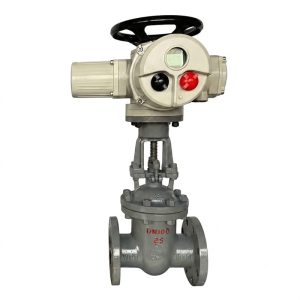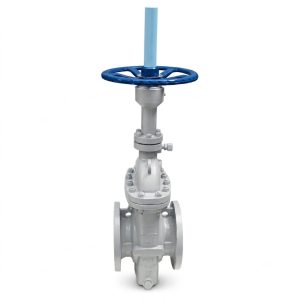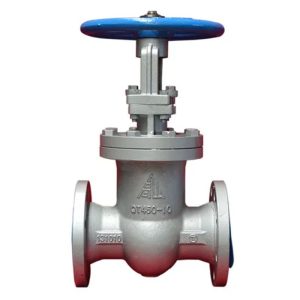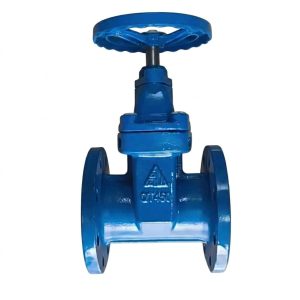
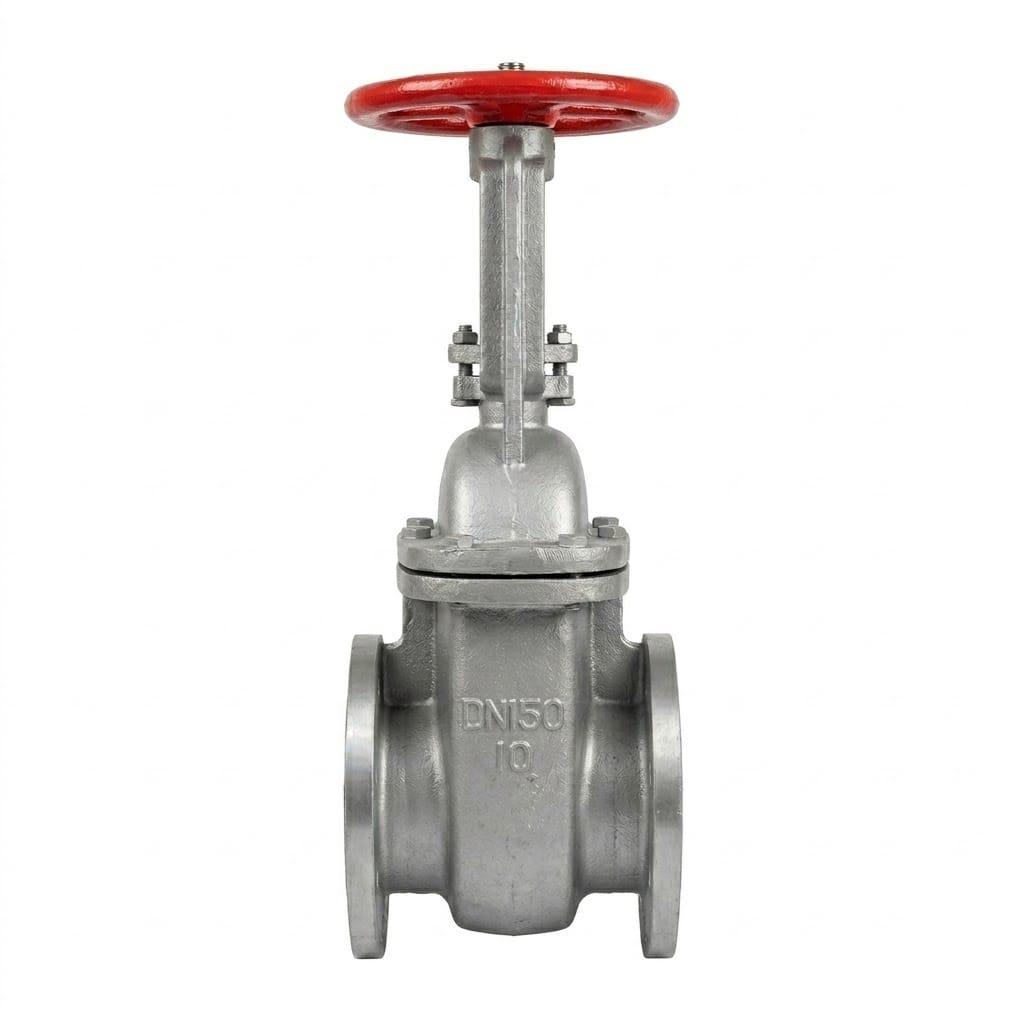
Z45T-10 / Z45T-10C Bronze Seat Gate Valve
- Product Model: Z45T Non-Rising Stem Wedged Gate Valve (Z45T-10 / Z45T-10C)
- Pressure Rating: PN10 (1.0MPa)
- Connection Type: Flanged connection
- Operation Mode: Manual handwheel operation
- Structure: Non-rising stem, wedged rigid single disc
- Body Material: Gray cast iron / ductile iron
- Sealing Surface: Bronze material, wear-resistant and durable
- Flow Performance: Straight passage, low flow resistance, two-way flow
- Applicable Medium: Water, sewage and other non-corrosive media
- Application: Water supply, drainage, municipal engineering, industrial pipelines
Contact Us for Pricing
Interested in this product? Contact us now for detailed pricing and product information.
Product Details
The Z45T-10 and Z45T-10C bronze seat gate valves are flanged, non-rising stem (NRS) wedge gate valves built for water supply and distribution. A brass seat ring gives durable metal-to-metal sealing that tolerates the mineral content of mains water, the straight-through bore keeps friction losses low when open, and the non-rising stem means the valve needs no headroom above the bonnet — which is why this pattern is buried in chambers, mounted on risers and fitted where a rising stem would hit a ceiling. Rated PN10 from DN40 to DN1000.
- Non-rising stem (NRS) wedge gate valve — no headroom needed above the bonnet
- Bronze (brass) seat ring on the disc and body: durable metal-to-metal sealing for water duty
- Z45T-10 in gray cast iron for general works; Z45T-10C in WCB cast steel where strength matters
- 2Cr13 stainless steel stem with a bronze stem nut, PTFE packing, two-way flow
- Full bore straight passage — low flow resistance, no pockets for debris
- PN10 (1.0 MPa), DN40–DN1000, water and non-corrosive media up to 135°C
Product Overview
The Z45T-10 and Z45T-10C are flanged bronze-seated non-rising stem gate valves for water supply and distribution networks, widely used in municipal waterworks, irrigation, fire protection pipelines and general industrial water handling. The Z45T-10 uses a gray cast iron body, bonnet and wedge for economical general-purpose installations; the Z45T-10C uses WCB cast steel for higher mechanical strength. Both share a 2Cr13 stainless steel stem, a bronze stem nut and PTFE stem packing.
A gate valve is an isolation valve, not a regulator. The wedge travels in straight lines to either lift clean off the seats or sit fully down, so the valve is either fully open with almost no pressure loss, or shut. Used that way on a water main it will sit undisturbed for years and still close dry. Used half-open, the medium washes the exposed underside of the wedge and wires the seats, and the valve never seals again. Everything on this page assumes the valve will be run between its two end positions.
What the Model Code Means
Z = gate valve, 4 = flanged connection, 5 = non-rising stem wedge-type single gate, T = bronze (copper alloy) seat facing; 10 is the PN10 class and a trailing C marks the WCB cast steel body. Compare coding systems on the Valve Model Decoder.
Core Strengths
Bronze Seat Ring That Forgives Dirty Water
The wedge and body seats carry a machined brass facing. Bronze is softer than the cast iron it seats against, so grit carried in a main embeds in or is crushed by the bronze rather than gouging a hard stainless face. That is why bronze-seated gates remain the default on municipal water, where a line is never fully clean.
Non-Rising Stem for Confined Installations
The stem threads inside the wedge, so the stem rotates and the gate travels along it without the stem rising. The valve can be fitted in a shallow chamber, under a stair soffit or below a ceiling where a rising stem valve would not have the stroke height available. The trade is that position cannot be read from the stem, so a position indicator on the handwheel is worth specifying.
Two Body Materials, One Pattern
Z45T-10 gray cast iron covers standard waterworks duty at the best price. Z45T-10C in WCB cast steel adds strength where the valve sees backfill load, traffic loading above a buried chamber, or repeated closure shock. Dimensions and flange drilling are identical, so the two are interchangeable in the line.
Low Flow Resistance When Open
The bore is unobstructed in the open position — the wedge lifts entirely out of the passage — so pressure loss across a fully open gate is among the lowest of any valve type. On a long distribution main where pumping head is money, that matters more than the purchase price of the valve.
Bidirectional and Simple to Maintain
The valve seals in either direction, so there is no wrong way to fit it on a distribution loop. The bolted bonnet exposes the wedge and seats for inspection without breaking the line, and the packing is a conventional PTFE set that any maintenance crew can repack.
Sized for Mains, Not Just Branches
The range runs from DN40 to DN1000, so a single pattern covers branch connections, distribution mains and pump station headers. That consistency reduces the number of spare parts and actuator interfaces a utility has to stock.
Performance Specifications
| Model | Nominal Pressure PN (MPa) | Shell Test Pressure (MPa) | Seal Test Pressure (MPa) | Working Temperature (°C) | Applicable Medium |
|---|---|---|---|---|---|
| Z45T-10 / Z45T-10C | 1.0 | 1.5 | 1.1 | ≤135 | Water |
PN10 class only. The 135°C ceiling is set by the bronze seating and the packing; for hotter water or steam duty, a rising stem steel gate valve is the correct selection rather than a longer temperature allowance on this one.
Materials of Main Parts
| No. | Part Name | Z45T-10 (Gray Iron) | Z45T-10C (Cast Steel) |
|---|---|---|---|
| 1 | Valve Body, Bonnet, Disc | Gray Cast Iron | WCB Cast Steel |
| 2 | Valve Stem | 2Cr13 Stainless Steel | 2Cr13 Stainless Steel |
| 3 | Seal Ring | Brass (Bronze) | Brass (Bronze) |
| 4 | Stem Nut | Brass | Brass |
| 5 | Packing | PTFE (Polytetrafluoroethylene) | PTFE (Polytetrafluoroethylene) |
Main Dimensions & Weights
DN40 – DN200
| Nominal size | L (face-to-face) | H (total height) | D0 (handwheel) | Weight (kg) |
|---|---|---|---|---|
| DN40 | 165 | 250 | 160 | 12 |
| DN50 | 178 | 280 | 180 | 17 |
| DN65 | 190 | 300 | 180 | 20 |
| DN80 | 203 | 330 | 200 | 25 |
| DN100 | 229 | 358 | 200 | 30 |
| DN125 | 254 | 400 | 260 | 50 |
| DN150 | 267 | 480 | 280 | 64 |
| DN200 | 292 | 565 | 280 | 96 |
DN250 – DN500
| Nominal size | L (face-to-face) | H (total height) | D0 (handwheel) | Weight (kg) |
|---|---|---|---|---|
| DN250 | 330 | 675 | 320 | 145 |
| DN300 | 356 | 770 | 360 | 197 |
| DN350 | 381 | 968 | 400 | 268 |
| DN400 | 406 | 1090 | 500 | 345 |
| DN450 | 432 | 1175 | 500 | 446 |
| DN500 | 457 | 1414 | 720 | 547 |
DN600 – DN1000
| Nominal size | L (face-to-face) | H (total height) | D0 (handwheel) | Weight (kg) |
|---|---|---|---|---|
| DN600 | 508 | 1277 | 620 | 680 |
| DN700 | 610 | 1630 | 720 | 950 |
| DN800 | 660 | 1850 | 800 | 1200 |
| DN900 | 711 | 2250 | 800 | 1635 |
| DN1000 | 811 | 2400 | 900 | 1950 |
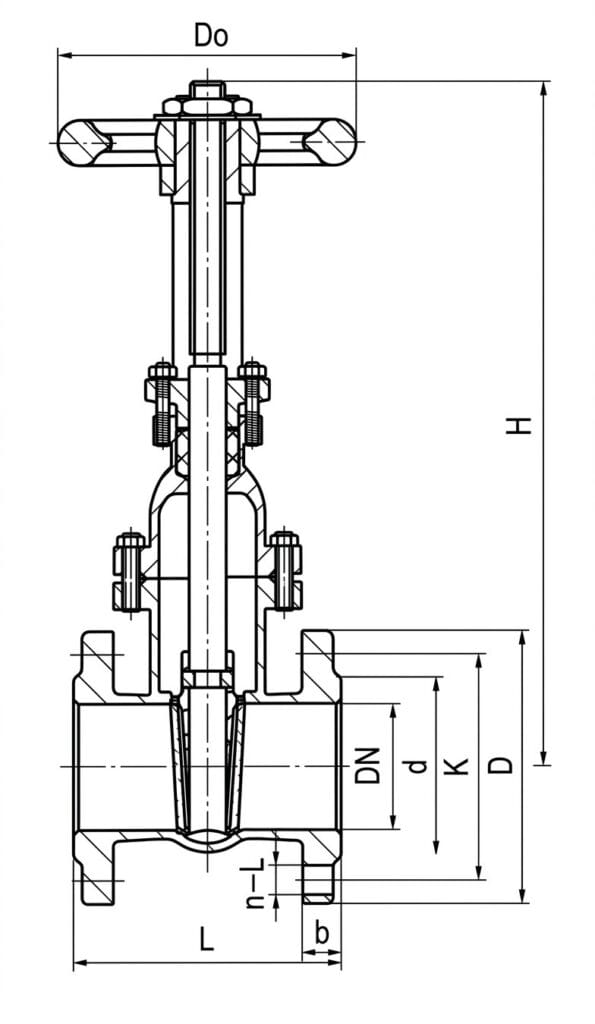
L = face-to-face, H = total height with the valve closed, D0 = handwheel diameter. Flange facings and drilling follow GB/T 9113 PN16 pattern as standard; tell us if your mating flange is to another standard. Certified drawings are issued with the quotation.
Non-Rising or Rising Stem: Which Gate Valve to Specify
| Requirement | Z45T bronze seat NRS gate | Z41H / Z41W rising stem gate |
|---|---|---|
| Headroom above the valve | Not required — stem does not rise | Needs the full stem stroke clear above the bonnet |
| Position indication | Not visible; add an indicator to the handwheel | Stem rises visibly, position readable from a distance |
| Seating | Bronze on iron/steel, tolerant of grit in water | Stainless or alloy faced, for steam and hotter duty |
| Typical service | Water mains, chambers, buried and indoor risers | Steam, process, high temperature water |
| Where it fails | Not for above 135°C, not for throttling | Wastes money on cold water isolation |
If your specification calls for a resilient seated (EPDM wedge) non-rising gate instead of a bronze seat, say so when you enquire: the body is the same pattern, but the seat and the temperature range differ, and the two are not interchangeable on a steam or hot water line.
Structure Drawing
Design, Testing and Reference Standards
- Design and manufacture: GB/T 12232 (iron gate valves), GB/T 12234 (steel gate valves)
- Structure length: to the series dimension table above; flange facing to GB/T 9113
- Testing and inspection: GB/T 13927, API 598, ISO 5208
- Flange standard reference: ASME/ANSI B16.5 (on request for the cast steel variant)
- Valve designation method: JB/T 308
- International equivalents API 6D and BS 5163 available on request for waterworks tenders
Installation & Maintenance Guidelines
- Sealing Surface : Bronze material, wear-resistant and durable
- Flow Performance : Straight passage, low flow resistance, two-way flow
- Applicable Medium : Water, sewage and other non-corrosive media
- Application : Water supply, drainage, municipal engineering, industrial pipelines
- Stroke check before burial: cycle the valve fully open and fully closed before the chamber is backfilled, and record the number of turns. On a non-rising stem this is the only reliable way to know the wedge is off its seat.
- Do not throttle: hold the valve fully open or fully closed. Part-open operation wires the bronze seats and the valve will never close dry again.
- Support the pipe: the valve should carry no pipe weight or bending load; align the flanges before inserting bolts rather than pulling them together with the bolts.
Application Fields
This is the standard isolation valve of a water network: Municipal water supply and distribution networks; Fire protection systems (hydrant lines, sprinkler mains); Agricultural irrigation systems; HVAC chilled and hot water circuits; Process water treatment plants and cooling towers; General industrial fluid isolation. Where the duty is clean cold water and the valve is opened only for maintenance, the bronze seated non-rising gate is the least expensive way to do the job properly.
What We Need to Quote Your Z45T Gate Valves
- Size and quantity: DN40 to DN1000, mixed lists welcome.
- Body material: gray cast iron (Z45T-10) or WCB cast steel (Z45T-10C).
- Medium and temperature: cold water is standard; confirm anything above 135°C.
- Stem type: non-rising as standard; rising stem or extension spindle for deep chambers.
- Flange standard: GB/T 9113 as standard; EN 1092 or ASME on request.
- Accessories: key head or handwheel, position indicator, locking device, extension stem.
- Documentation: EN 10204 3.1 certificates and test records for tender packages.
Send a valve schedule or a drawing and we will confirm sizes, face-to-face and the correct stem type for each chamber. Drawings are in the download center and qualifications on the certifications page.
Frequently Asked Questions
What does non-rising stem actually mean, and why specify it?
The stem is threaded into the wedge and turns in place instead of rising, so the gate travels inside the body. You specify it where there is no headroom above the valve – a buried chamber, a basement ceiling, a riser in a duct. The trade-off is that you cannot read the position from the stem, so ask for a handwheel position indicator if operators need to confirm the state at a glance.
Why bronze seats instead of stainless or rubber?
Bronze is softer than the iron it closes against, so grit carried in mains water is crushed or embedded rather than gouging a hard face. That makes a bronze seated gate forgiving on dirty water. Rubber resilient seats seal better when new but are limited on temperature and can be cut by sharp debris during commissioning.
Can the Z45T be used to control flow?
No. A gate valve is an isolation device. Held part open, the medium cuts into the exposed underside of the wedge and the seats, and the valve loses its ability to seal. If you need to regulate flow, specify a globe valve or a control valve instead.
Which model should I choose, Z45T-10 or Z45T-10C?
Same pattern and same dimensions. Z45T-10 has a gray cast iron body, bonnet and wedge and is the economical choice for normal waterworks duty. Z45T-10C uses WCB cast steel where the valve sees backfill or traffic loading, higher closure shock, or where your specification rules out grey iron.
What temperature and pressure can it take?
PN10 – shell tested at 1.5 MPa and seated tested at 1.1 MPa – with a working limit of 135 degC set by the bronze seating and packing. For hotter or higher pressure service, use a rising stem steel gate valve from the same series family.
How do I maintain a valve that sits closed for years?
Cycle it at least once a year. Standing closed lets mineral deposits bond the wedge to the seats and the stem threads dry out; monthly is ideal on a critical line, annual is the practical minimum. Keep the stem threads clean and lightly greased, and repack the PTFE glands if you see weeping at the stem.
Get a Quote & Technical Support
Contact Gaoshan Valve for dimension drawings, stem extension options, material certificates and a Z45T selection matched to your chamber or riser. Reply within 24 hours from our overseas sales desk.