
A municipal water main and a chemical processing line can run the exact same nominal bore and the exact same pressure class — and still end up with two completely different valves at every isolation point. That’s not inconsistency; it’s two industries solving two different problems. Water utilities standardize on gate valves. Chemical plants standardize on globe valves. Understanding the gate valve vs globe valve difference is the fastest way to stop over-specifying (or under-specifying) your next order.
- Gate valve = a switch. Full-bore on/off isolation, minimal pressure drop, rarely operated.
- Globe valve = a dial. Precise throttling, frequent cycling, robust seating under harsh media.
- The deciding factor is the function at that point in the line — isolation versus regulation — not the industry label.
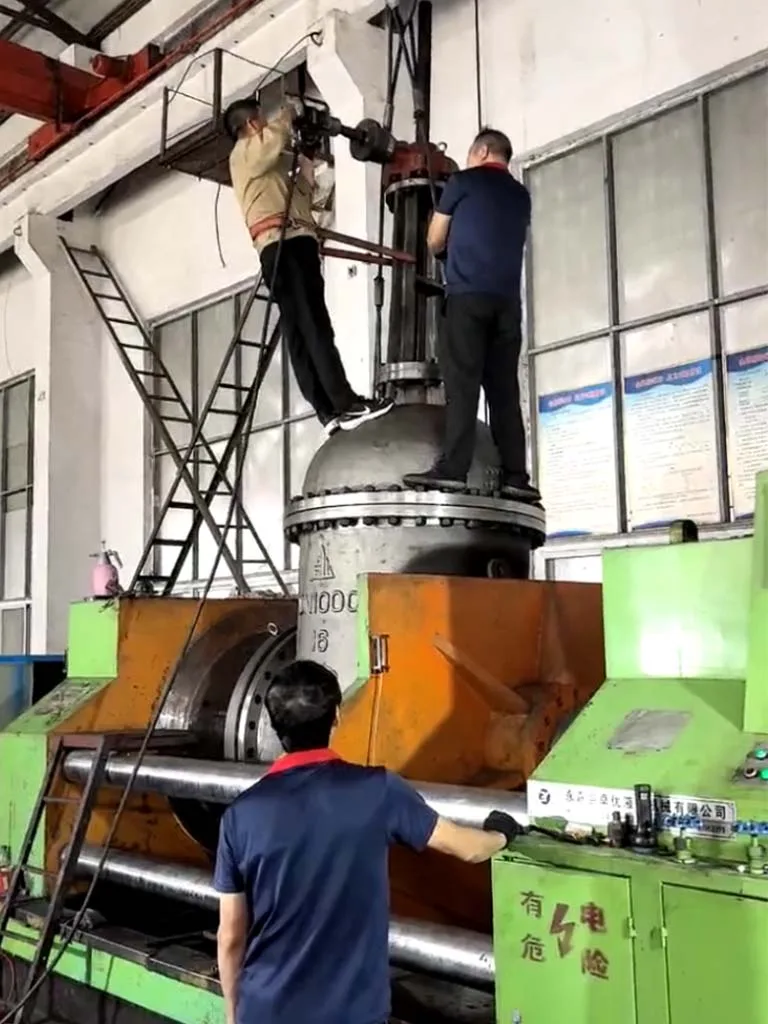
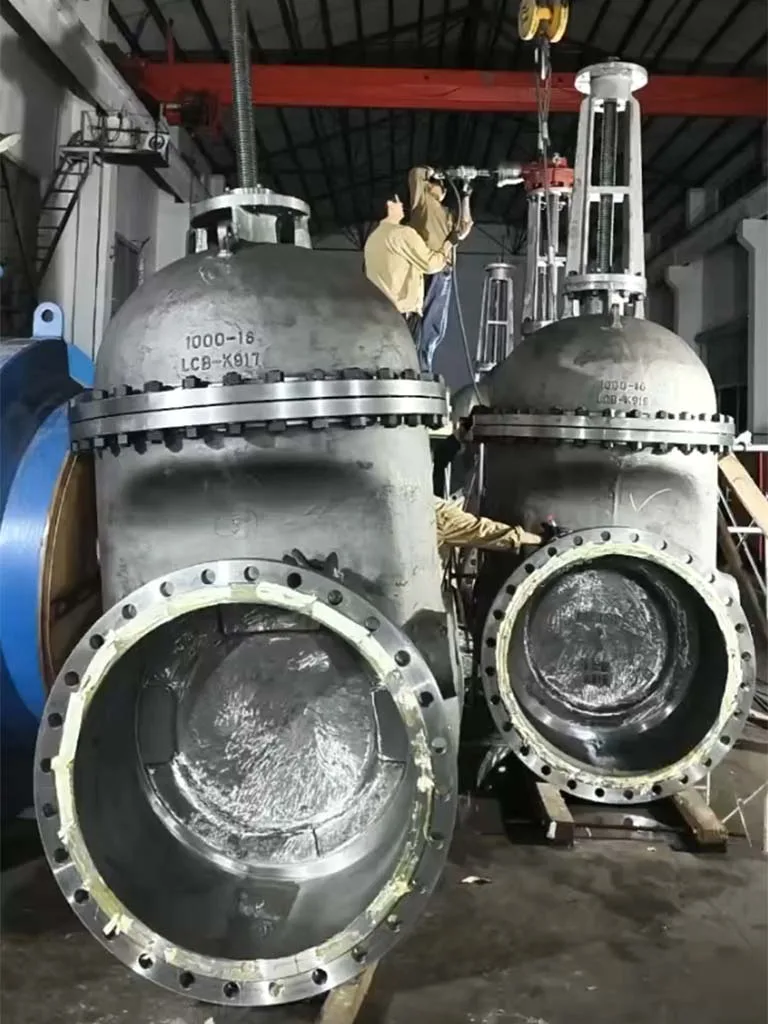
Gate Valve vs Globe Valve: The One-Sentence Rule
If you only take away one thing from this guide, make it this:
A gate valve is a switch. A globe valve is a dial.
A gate valve is built to do one job extremely well: get completely out of the way when open, and seal completely when closed. A globe valve is built to do a harder job: hold a stable position anywhere between open and closed, cycle thousands of times, and still seal reliably. Using one in place of the other doesn’t just hurt efficiency — it shortens the valve’s service life, because a disc designed for throttling wears differently than a wedge designed for isolation, and vice versa.
Why Municipal Water Mains Default to Gate Valves
Water transmission mains care about one thing above almost everything else: moving the largest possible volume with the smallest possible resistance. A gate valve’s full-bore, straight-through body means that in the open position, the flow path is essentially a straight pipe — the gate is fully retracted out of the waterway. There is very little to disrupt flow, which keeps head loss (and therefore pumping energy) low.
This matters more as pipe diameter increases. Most municipal trunk mains sit at DN300 and above, with many major transmission lines at DN500–DN800 or larger, and pumping is typically the single largest recurring operating cost for a water utility. On lines that size, even a small increase in resistance compounds into a real electricity bill. Because water mains are opened once and then left fully open for months or years at a time — they’re isolation devices for maintenance and emergencies, not flow-tuning devices — a gate valve’s few weaknesses (higher torque to operate, unsuitability for throttling, a longer face-to-face dimension at large sizes) simply never come into play in this application. Combined with generally lower manufacturing cost at large bore sizes, the gate valve is the practical default for straight-run isolation on clean or lightly treated water.
Typical gate valve applications in water and utility service include:
- Transmission and distribution main isolation (DN300 and up)
- Pump suction and discharge blocks
- Reservoir, tank, and treatment-facility inlet/outlet isolation
Why Chemical Plants Reach for Globe Valves Instead
A chemical process line is a different environment on almost every axis that matters to a valve. The media may be corrosive or erosive. Lines run hot and run under pressure. And critically, the valve isn’t set once and forgotten — it’s adjusted routinely as part of normal process control, sometimes many times per shift.
Internally, a globe valve forces flow to change direction as it passes through the body and seat, and the disc closes by moving straight down onto (or away from) a seat ring, rather than sliding a wedge across two seat faces. That change-of-direction geometry does cost pressure — a globe valve typically has meaningfully higher pressure drop than a gate valve of the same size — but it buys two things a chemical process line needs more than raw flow efficiency:
- Precise, repeatable throttling. Because the disc travel is short and linear relative to flow area, a globe valve gives an operator fine control over flow rate at partial openings — something a gate valve, by design, is not built to do reliably.
- A seating design that tolerates frequent cycling. The perpendicular disc-to-seat contact resists erosion from repeated operation and from media that carries suspended solids or is chemically aggressive, better than a wedge-and-parallel-seat arrangement does under the same duty.
That combination — accurate control plus durability under frequent operation and harsh media — is exactly what chemical process piping demands, which is why globe valves dominate on control and throttling points even though gate valves would offer lower pressure drop if flow efficiency were the only consideration.
Gate Valve vs Globe Valve: Selection Cheat Sheet
| Condition | Points toward |
|---|---|
| Large-bore, straight-run isolation (pipe rarely touched once set) | Gate valve |
| Pumping energy / head loss is a major cost driver | Gate valve |
| Large diameter (DN500 and above), simple on/off duty | Gate valve — also generally more economical to manufacture at this size |
| Fine flow adjustment / throttling is required | Globe valve |
| Valve is opened and closed frequently as part of normal operation | Globe valve |
| Media is corrosive, hot, or under high pressure | Globe valve — more robust, repeatable seating under duty |
The short version, as it’s often put on the plant floor: the coarser and more permanent the flow, the more it favors a gate valve; the more precise and frequent the operation, the more it favors a globe valve.
The Exception Worth Flagging
This isn’t an absolute rule split cleanly by industry. Chemical plants do not run globe valves everywhere — large-bore isolation lines in a chemical plant, where the requirement is simply cutting off flow rather than controlling it, still commonly use gate valves for the same reasons a water main does. The deciding factor is always the function at that specific point in the line — isolation versus regulation — not the industry label on the facility.
What the Market Data Shows
The gate valve vs globe valve application split isn’t just a rule of thumb — it shows up clearly in industry sizing data:
- The global gate valve market was valued at roughly USD 18.7 billion in 2025, with water and wastewater treatment representing the second-largest end-use segment at close to 29% of demand, behind only oil & gas — driven largely by aging municipal infrastructure replacement and treatment-facility expansion in developing markets.
- Gate valves alone accounted for over a quarter of total U.S. valve market value in 2025, reflecting how entrenched they are as the specified default for pipeline and water-network isolation.
- Globe valves, by contrast, post their strongest share in process industries — chemical processing, oil & gas, and power generation — where regulation and throttling duty, not simple isolation, is the primary requirement.
- Analysts covering the broader industrial valve market (projected to grow from roughly USD 80–100 billion in 2025 to well over USD 120 billion by the early 2030s at a 4–6% CAGR) consistently cite the same demand drivers behind this split: water infrastructure renewal pushing gate valve replacement cycles, and chemical/process capacity expansion pushing globe valve demand for control-intensive service.
- Industry analysis of valve failures also puts a number on the cost of getting this choice wrong: a large share of premature valve failures and maintenance overruns in industrial piping trace back to incorrect valve-type selection for the duty involved, not a defect in the valve itself.
The standards bodies reinforce the same split from the design side. Gate valves for refinery and heavy industrial service are governed by API 600, while globe valves have their own dedicated standard, API 623 — introduced specifically because globe valves require larger stem diameters and different sealing and wall-thickness requirements than a gate valve design accounts for. The existence of two separate standards is itself a signal: these are not interchangeable product families with different housings, they are different mechanisms engineered for different jobs.
Quick Reference: Gate Valve vs Globe Valve Sizing & Standards
| Gate Valve | Globe Valve | |
|---|---|---|
| Primary duty | On/off isolation | Throttling / flow regulation |
| Flow path | Straight-through when open | S-shaped, changes direction |
| Typical pressure drop | Low | Higher |
| Best duty cycle | Rarely operated | Frequently operated |
| Common large-diameter use | DN300 and up, water/utility mains | Less common above mid-range DN; used where control still matters |
| Key design standard | API 600 (steel gate valves) | API 623 (steel globe valves) |
| Typical weak point if misapplied | Poor throttling control, seat wear from partial-open erosion | Unnecessary pressure loss if used purely for isolation |
FAQ: Gate Valve vs Globe Valve
Can a gate valve be used for throttling in a pinch?
Not reliably. Partially open, a gate valve’s disc sits in the flow stream at an awkward angle, which causes vibration, accelerated seat and wedge erosion, and unpredictable flow control. It will work as an emergency measure but shouldn’t be specified for regular throttling duty.
Is a globe valve ever the wrong choice for isolation?
On smaller and mid-range bore sizes, no — many plants use globe valves for isolation without issue. The concern is mainly at large diameters, where a globe valve’s higher pressure drop and higher actuation torque become expensive relative to a gate valve doing the same isolation job.
Do chemical plants use gate valves at all?
Yes, extensively — for large-bore isolation, tank inlets/outlets, and any point where the requirement is simply full flow or no flow rather than modulation.
What should I check before specifying either valve for a new project?
Confirm the actual duty at that point in the line (isolation vs. regulation), operating frequency, media characteristics (temperature, pressure, corrosiveness), and the governing design standard (API 600, API 623, ANSI B16.34, etc.) required by the project spec.
Specifying Valves for Your Project?
Henan Gaoshan Valves Co., Ltd. has manufactured industrial valves since 1975, supplying gate valves, butterfly valves, steam traps, pressure reducing valves, and related flow-control products to procurement teams across North America, the Middle East, and beyond. Our gate valve line covers bronze-seated, resilient-seated, and motor-operated configurations across a wide DN and pressure-class range, built to meet API and ANSI requirements for water, utility, and industrial piping projects.
If you’re specifying valves for a water transmission project, a treatment plant, or an industrial pipeline and want a second opinion on gate valve vs globe valve selection for your specific line conditions, get in touch with our engineering team — we’re happy to review your spec sheet.